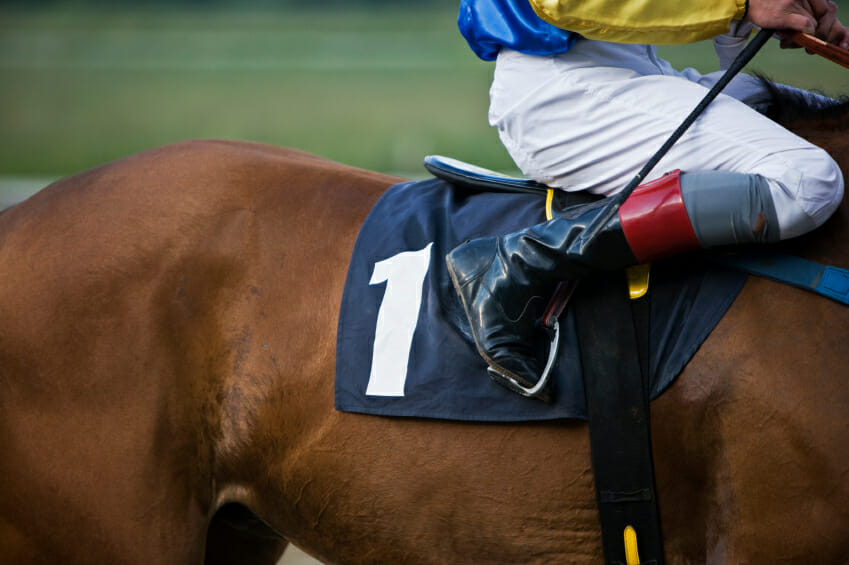
We all know of a few ‘amazing’ stories about thoroughbreds rescued from the brink of going to slaughter and going on to be amazingly talented horses performing to Olympic level. And there are thousands of stories where thoroughbreds have been re-homed and re-educated to be dependable, talented riding horses.
The fact it can be done though doesn’t mean it is an easy task. Many thoroughbreds, and especially those who have raced take a lot of time and patience to re-educate and re-condition to live and work as a pleasure or performance horse. While there is no doubt that good education from a ‘steady hand’ is of utmost importance in a thoroughbred’s ‘transformation’, a large part of their transition from racehorse to riding horse is dependent on good nutrition. In this post we will look at the rather unique situation of feeding an off-the-track thoroughbred and the strategies you might use to get the best results.
In a survey conducted in 2001 published in the Australian Veterinary Journal (Richards et al 2006) we found that thoroughbreds in racing stables are fed an average of 7.3 kg of grain-based feed per day. Some trainers fed as much as 13 kg of grain per day and feeding just twice a day was the norm.
Oats was the most commonly fed grain while corn, barley and commercial feed mixes were also popular choices. It was uncommon for trainers to use ‘cooked’ grains. As a result of these high grain diets fed in large meals where much of the starch would be considered indigestible in the small intestine we found that around 25% of horses were experiencing hindgut acidosis.
To make things worse for these horses very little forage is fed. Less than 1 kg/day of chaff was fed by a majority of trainers while horses only received hay an average of 1.5 times a day. We didn’t actually weigh the hay but the amount was small (probably around 2 kg/horse/day).
Essentially what you are likely to end up with when you take a thoroughbred directly from the racetrack is a horse whose gut has adapted as best it can to high grain diets and in the process has lost some ability to do well on high forage diets.
Some of the problems associated with feeding and nutrition you are likely to encounter in these off-the-track thoroughbreds include:

The first critical step in getting a thoroughbred back to ‘normal’ is to restore the balance of bacteria in the hindgut and get fibre digestion working properly again. If you have the time, this is easily done by simply putting the horse on a forage only diet with as much forage available as the horse would like to eat. Over time, the starch/sugar fermenting bacterial populations will fall (because you simply aren’t feeding them their preferred food anymore) and the fibre fermenting bacterial populations will SLOWLY be restored.
The fibre fermenting bacteria are somewhat slow to reproduce so this isn’t something that is going to happen very quickly. You may also find that particular species of fibre fermenting bacteria have almost completely disappeared from the hindgut (something you really can’t test for) so it takes a long time for the population to get back to normal.
Many people ask if probiotics will help. The simple answer is no, the majority of them won’t. Many probiotics are designed to assist with killing or suppressing pathogenic bacteria in the gut and they predominantly contain lactobacillus species of bacteria. Lactobacillus are starch/sugar fermenting bacteria and one of the groups of bacteria you want to reduce numbers of, not increase.
What may help is using a fecal transplant, which is stomach tubing the horse with a strained slurry of manure taken from a healthy (worm free) horse on a high forage based with the goal of introducing the healthy bacteria from the donor horse to the gut of your off-the-track racehorse. This strategy is used with great results in feedlot cattle affected by acidosis to repopulate the rumen with ‘good’ bacteria.
While this process of rebalancing the hindgut takes time it is essential if you want to have a horse that has a gut that functions normally.
Here is how to carry out a successful fecal transplant:
Reference: Mathijs et al (2019) Free Faecal Water: What do we know and can equine faecal microbiota transplantation be used to manage this issue? European Equine Health and Nutrition Congress, Utrecht, The Netherland
To a large extent getting the hindgut functioning normally will correct issues the horse may have with its hooves being weak, shelly and/or growing slowly. Once the fibre fermenting bacteria are back and producing biotin again you should see good improvement in hoof quality (assuming requirements for nutrients like copper and zinc are being met). You may however like to use a hoof supplement to provide additional biotin to the horse in the short term. It is recommended that to positively impact hoof growth you should feed 20 mg of biotin per day for a 500 kg horse. If you do wish to feed biotin, use FeedXL to help select your hoof supplement. The amount of biotin in the diet is on the ‘Health’ tab. This will guide you in working out dose rates to meet your horse’s requirement for this nutrient.
Again, getting the hindgut rebalanced will go a long way to improving the appetite of off-the-track thoroughbreds as they will be able to correct any vitamin B1 deficiency that may have been present. You can also use one of the many appetite or vitamin B1 supplements on the market to try and improve appetite. But remember that gastric ulcers are likely lurking in the stomach of your new horse and until they are resolved a poor appetite is likely to be present, regardless of what you feed or how you try to tempt the horse.
Gastric ulcers really must be treated so they resolve fully (talk to your vet about the most effective treatment options). There are some good US studies that show alfalafa/lucerne hay will help gastric ulcers to resolve given enough time. Incorporating alfalfa/lucerne into the forage base of the horse’s diet (up to 1 kg/100 kg BW or 1 lb/100 lb BW) may therefore also help to resolve ulcers and then to keep them at bay once treatment ceases. Once the ulcers are gone you should see a marked improvement in the horse’s appetite.
Often the biggest priority for the owner of a new off-the-track thoroughbred is to get the horse gaining weight. While you could ‘feed the heck out of them’ and give them large amounts of grain based feed to put weight on them you are going to miss the opportunity in doing this of getting their entire gastrointestinal tract functioning ‘normally’ again. If you force weight gain with grain based feeds many of the problems discussed above will still be present and the horse still won’t be utilising fibre very efficiently. The end result is a horse that will need A LOT of feed to hold its weight long term (which is going to cost you a fortune).
So if time is on your side and you can be patient, hold off on pushing for weight gain until your horse has restored the balance of bacteria in its hindgut again and can properly utilise the fibre in its diet. Once it can do this you will find it takes a whole lot less feed to put weight on them. It is also crucial that any problems with ulcers have been resolved and that appetite has been restored before any attempt to put weight on the horse is made.
A note about fence walkers – Separation anxiety and fence walking is a common problem with newly off-the-track thoroughbreds. Given they are raised in groups and are virtually never left alone it is understandable. But if you think about it, a horse walking a fence instead of grazing has a high energy output and a low energy intake … there is no way you are going to put weight on a horse doing this. If you have a fence walker that needs to gain weight you are going to need to find it a buddy who is calm and spends a lot of time grazing and sleeping. The sooner your new horse can learn to do this the better.
Thoroughbreds are certainly capable of gaining and holding a lot of weight. It is just a matter of getting their gut (relatively simple) and their mind (sometimes not so simple … is that diplomatic enough?) sorted out. I see overweight thoroughbred weanlings, yearlings and broodmares all of the time, they are common. So, with some patience and strategy you will be able to get weight on and keep weight on your horse.
Thoroughbreds are typically thought of as being quite ‘hot’ – the “react and then think” types. This issue is compounded when you take a horse that only has very basic education, straight off the race track and immediately start trying to ride it at the same time as you are trying to feed it a high energy diet for weight gain.
Again, patience is king here. Give the horse time to adjust to its new environment and in the early stages of its re-education feed a very basic (but still balanced diet, be sure to use FeedXL to make sure all nutrient requirements are met), high forage, moderate energy diet with no grain. The more education you can give a horse before you really start feeding it ‘the good stuff’ for weight gain the better.
Here is a guideline for how you might approach feeding a thoroughbred that has come directly out of a racing stable:
Month 1 – Put the horse out to pasture or give it access to ad lib good quality grass hay and feed 1 kg/100 kg BW of alfalfa/lucerne per day. Use FeedXL to balance the diet correctly using a pasture balancer pellet or low dose vitamin and mineral supplement. If possible just let the horse be a horse without any pressure to be ridden or trained (other than to have good ground manners if these are lacking).
You should treat the horse for ulcers where applicable, have a faecal egg count done and worm appropriately and have teeth/hooves etc attended to by qualified professionals during this first month.
Months 2 to 4 – Depending on the how the horse is going and how well its hindgut is functioning by the second month you may be seeing an improvement in condition or a worsening of condition. If the horse’s condition is dropping away check for issues like ulcers (they could still be present), general anxiousness (is the horse pacing the fence constantly) or pain, for example a back injury that is making it uncomfortable for the horse to graze/eat properly.
During these months you may begin to add some high energy feeds but if the horse’s hindgut still doesn’t appear to be functioning correctly (eg its manure consistency is still not right or it is still really struggling to hold weight on a high quality pasture/hay diet) I would try to stay away from grains and grain based feeds. Use ingredients like grain free complete feeds (FeedXL will help you find truly grain free feeds), lupins, sugarbeet pulp, soybean or lupin hulls, full fat soybean and copra meal. If you are going to start riding the horse during this time these feeds might also help to keep your horse a little more level headed. Just mind you don’t give it a very high energy diet before you start riding it – for some horses that is just asking for trouble.
Months 5 to 12 – I would hope that by the 5th month the horse’s hindgut is back to normal or at least close to normal and by this time the horse will have semi-adjusted to its ‘new’ life. At this point in time you can consider other feeds including those based on grain. But PLEASE be sure to use cooked grain based feeds because the last thing you want to do at this point in time is put any sort of starch back into the hindgut.
The horse’s temperament and need for weight gain at this stage will determine how much feed you can feed. Still use forage as the major component of the diet and try to avoid feeding more than 800 grams of feed (approx. 1 lb) per 100 kg BW per day, being sure to split it into as many feeds as practical during the day.
You might also consider starting to add some high fat feeds like rice bran or straight vegetable oils to the diet for extra energy to help with body condition. At this point in time you need to be very careful to distinguish between condition/fat and muscle. Many thoroughbreds will look very thin when they are actually in good body condition, while they lack topline and general muscle. So be sure to read our post on Body Condition Scoring to help you determine if your horse needs more condition or needs to build muscle. The former can be done with feed alone. The latter needs a combination of high-quality feed and the right work (as well as a horse that is fully sound with no back or other pain that will stop it from using its muscles correctly).
The more time you allow an off-the-track thoroughbred to readjust to a forage-based diet the better the results you will get. A racing thoroughbred’s gut is adapted to eating a high grain diet. Ultimately you want your off-the-track thoroughbred to have a gut well adapted to doing well on a high forage diet. It takes time for the gut to readapt itself, build the right populations of bacteria and to heal problems like ulcers. But it is time well worth spending (unless you want to continue spending a fortune on grain based feeds and still having a horse that is really difficult to put weight on).
Taking it slowly in the first few months will mean you are going to get your horse where you want it to be sooner in the end. You will hopefully also be treated to a horse that is more relaxed and trainable than it otherwise would be if you try to put weight on too quickly using high energy feeds too early.
Time to try FeedXL for your horse’s health?
Get EVEN MORE practical and personalised feeding guidance when you sign up to FEEDXL.
SIGNUP TO FEEDXL NOW
We would love to welcome you to our FeedXL Horse Nutrition Facebook Group. Ask questions and have them answered by PhD and Masters qualified equine nutritionists and spend time with like-minded horse owners. It’s free!
Click here to join the FeedXL Horse Nutrition Facebook Group
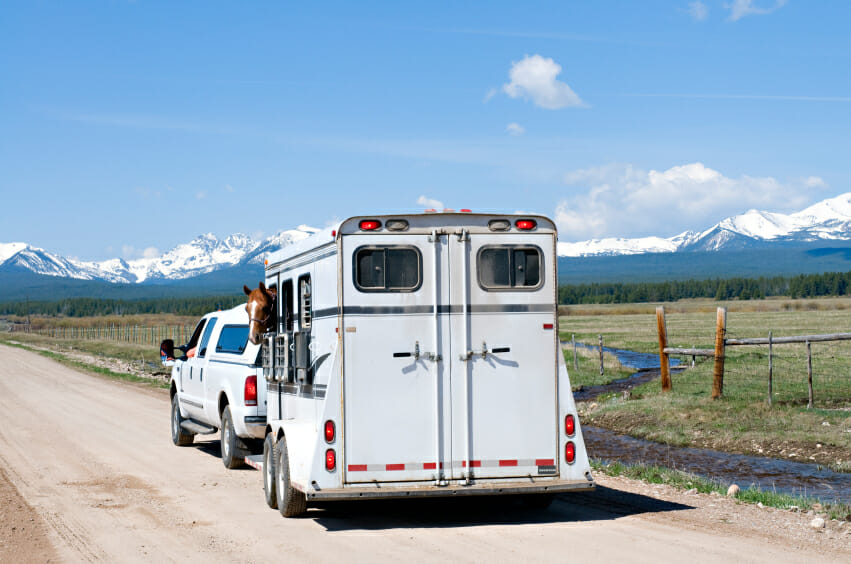
Horses in modern day society travel a lot. In fact it is amusing to think that throughout history, a horse’s most basic function was to transport humans from point A to B, and yet now we spend so much time and money transporting them. Transport for horses can be stressful, both physically and mentally. But as with all things, having a well prepared horse at the start of a journey means you have a far better chance of having a healthy horse at the end of the journey. Feeding and nutrition have a big role to play, both in preparing horses for a journey and keeping them healthy and content during the journey. The following article provides help with feeding before and during travel with horses.
If you will be travelling less than 4 to 6 hours there is little need to do anything special before a trip aside from ensuring your horse is healthy and well fed prior to the trip and will have suitable feed and water available as soon as the journey has ended.
If you will be travelling more than 4 to 6 hours some special adjustments to the feeding routine can be made to assist horses during long-haul transport. These include:
If you are travelling more than 4 to 6 hours you should plan to stop every 3 to 4 hours to allow horses access to water and feed. Keep your horse’s feed routine on the road as close to what he would be fed at home as possible. So if you feed a hard feed morning and night with forage during the day, stick to this same routine.
Ideally horses should be allowed access to hay or haylage while travelling during these longer trips. If you are feeding hay, it should be thoroughly wet (submerse it in water for 5 to 10 minutes) before being put into the feed manger or hay bag for feeding to reduce dust and mould spore contamination of the air.
Where possible, hang the hay feeder low so the horse has to put its head down to reach the hay, but be sure to attach it to the transport vehicle in such a way that should the horse become entangled it will break free easily.
Any type of hay is suitable for feeding during long trips, though feeding a small amount of lucerne hay at each rest stop may help to provide better buffering of the stomach and reduce the risk of ulcers, which can be a problem for some horses travelling long distances.
If you are travelling over multiple days and your horse needs to perform at the end of the journey, you will need to continue with feeding at least some of its normal high energy ration. As discussed above, current recommendations suggest the amount of grain based feeds fed should be halved during travel days. If weight loss is an issue for your horse during travel you should add high energy fibre to its diet to replace the energy removed from the diet when the grain is reduced.
There are many other management strategies you can put in place to help your horse stay healthy during long-haul travel, including:
Being well prepared with a healthy horse that is set up well to travel means you will have a very good chance of having a horse fit and ready to do what is required of it at the end of a journey. Subtle changes to the diet to increase forage and fibre intake, moderate protein intake and adjust grain or grain based feed intake all help to keep your horse content, healthy, well hydrated and at less risk of dehydration, impaction colic and injury or sickness during travel.
Taking adequate time to complete a journey, giving your horse regular rest stops and allowing it to feed in a head down position for good periods of time to clear its airways will also significantly reduce the risk of your horse developing pleuropneumonia. And of course, FeedXL will help you to make the required changes to a travelling horse’s diet without upsetting the diets balance which could cause you to unknowingly create other issues.
We would love to welcome you to our FeedXL Horse Nutrition Facebook Group. Ask questions and have them answered by PhD and Masters qualified equine nutritionists and spend time with like-minded horse owners. It’s free!
Click here to join the FeedXL Horse Nutrition Facebook Group
There is little more precious than the old horse around the place. These senior horses are often the dependable ones that look after a novice rider or give a young horse some confidence when out on the trails. Because they are so valuable and literally have a lifetime of experience under their ‘girth’, we want to do our best to keep them around as long as possible. While good veterinary, farrier and dental care are important for maintaining the long-term health of your geriatrics, their health care should always be based on a solid foundation of good nutrition and feeding practices.
As horses age, they go through several physiological changes that affect how and what you should feed to keep them as healthy as possible. Detailed below are four of the most important of these changes and how you can best manage them from a feeding and nutrition perspective.
As a horse gets older, its teeth eventually stop growing and will gradually start to wear down until chewing becomes difficult or ineffective.
Worn incisors (upper and lower front teeth) make it difficult for senior horses to graze as the top and bottom incisors need to make good contact in order to shear the pasture off. If a horse has worn or damaged incisors, but its molars used for grinding feed are still in good condition, feeding hay will allow the horse to readily get the forage into its mouth simply using its lips and tongue (no need for incisors). Once it is in the mouth the horse can use its molars to grind the forage as normal.
However, worn or damaged molars mean grinding feed also becomes difficult, so feeding hay is not a good idea as the horse can’t chew it enough to be swallowed and digested. Feed forage that has already been extensively chopped up or processed. Forages like short-chopped chaff or soaked hay cubes and pellets are good alternate forages for horses with no effective molars. Fibres like sugarbeet pulp and soybean hulls may also be used to increase an old horse’s fibre intake when they are no longer able to graze or eat hay.
If you are feeding grains, the grains should always be well processed (boiled, extruded, or pelleted) before being fed so the grain can still be digested even if they are not effectively chewed. Never feed whole grains to senior horses that can’t chew very well.
It is thought that as horses age their hindgut loses some of its ability to ferment fibre. This is likely due to changing populations of bacteria in the hindgut associated with ageing. A reduction in fibre fermentation means that older horses get less of the goodness out of forage (which partly explains why old horses need to be fed more to maintain their bodyweight).
Because the hindgut is not as effective at fermenting fibre, there should be a focus on feeding high quality forages with fibre that is easy to ferment. Lucerne/alfalfa hay and good quality, soft meadow/pasture hays are preferable to stemmy and mature hays that have tougher fibre to ferment. High energy ‘super fibres’ like sugarbeet pulp and soybean hulls are also excellent sources of fibre for older horses as they are very easy to ferment in the hindgut.
Some yeast-based pre‐biotics (which are used in many different feeds and supplements) have been shown to improve the digestion of fibre in the hindgut, so they may make a useful contribution to the diet of aged horses.
It is also likely that the hindgut of older horses doesn’t support the production of B‐vitamins as well as a younger horse’s gut does. Thus, it may be necessary to supply more B‐vitamins in the diet. FeedXL takes this into account and has raised B‐vitamin requirements for aged horses. The production of biotin may also be reduced in older horses so it may need to be added to the diet of older horses. For more information on supplementing with biotin, read our post ‘Biotin – should you supplement?’.
As horses age, they also find it harder to absorb phosphorous from the hindgut. Again, FeedXL takes this into account and has raised phosphorous requirements for aged horses.
In studies we conducted at The University of New England we found that an older horse had much lower concentrations of carbohydrate digesting enzymes in its small intestine than younger horses had. While it was a limited study with small horse numbers, it is likely that as horses age their ability to digest carbohydrates like starch in their small intestine is reduced. This means digesting feeds like grains becomes difficult (which also contributes to older horses needing to be fed more to hold their bodyweight).
So, aged horses should always be fed cooked grains that have been boiled, extruded, pelleted, micronised or steam flaked so that the starch they contain is easy to digest. If you suspect your horse has difficulty digesting grains look for a feed that has added starch digesting enzymes or use a supplement that contains enzymes like amylase and amyloglucosidase to help with the digestion of the grains.
Older horses also find it harder to digest protein in the small intestine and some with reduced liver and kidney function can also find it difficult to excrete waste products associated with eating too much protein. So, the key to feeding protein to older horses is to use high quality protein from lucerne/alfalfa, soybean, lupins, canola meal or faba beans to satisfy without oversupplying their requirements.
Perhaps the most obvious change in an older horse is some loss of mobility. Because they can’t get around so easily, try to have them in pastures that have the feed and water sources reasonably close together, so they don’t have to travel long distances for feed or water.
You will also probably find that if they are kept in a herd, they will slowly fall down the pecking order as they become easier to boss around. If this happens you should feed your old horse separately to avoid him having all his feed pinched by the younger horses higher in the order.
If you keep in mind the physiological changes occurring in your horse as he ages it will help you to adjust feeding accordingly. Feeding forages that are easy to chew and digest, grains that have been well cooked, increasing the intake of nutrients like phosphorous and B‐vitamins, providing good quality protein, and being aware of any mobility issues that may affect feed intake will help keep your oldies happy and healthy for years to come.
Join FeedXL today and take control of your horse’s nutrition
Get EVEN MORE practical and personalised feeding guidance when you sign up to FEEDXL.
SIGNUP TO FEEDXL NOW
We would love to welcome you to our FeedXL Horse Nutrition Facebook Group. Ask questions and have them answered by PhD and Masters qualified equine nutritionists and spend time with like-minded horse owners. It’s free!
Click here to join the FeedXL Horse Nutrition Facebook Group
Many individuals mistakenly believe that restricting feed drastically or feeding low-quality diets, such as straw, is the only solution for overweight or easy keeper horses. However, while this approach limits calorie intake and promotes weight loss, it also severely restricts essential nutrients like protein, vitamins, and minerals, potentially leading to various health issues.
Important steps for managing an easy keeper on a calorie-restricted diet:
An example of what to feed an easy keeper (weighing 500 kg):
If pasture quality is “poor” (visibly dried, brown, with seedheads present), full-fat soybean could be supplemented for additional protein.
Why Addressing Weight Matters:
Overweight horses face numerous health challenges similar to humans, including insulin resistance, laminitis, increased joint wear, reduced mobility, and heat stress. A carefully balanced diet not only helps manage weight but also promotes overall health and well-being. Simply restricting calories without meeting other nutritional needs can lead to an unhealthy, undernourished horse.
It’s essential to approach weight management in horses with a balanced diet that restricts calories while ensuring all nutrient requirements are met. This approach supports optimal health and longevity, avoiding the pitfalls of extreme dietary restrictions that compromise overall well-being.
Join FeedXL today and take control of your horse’s nutrition
Get EVEN MORE practical and personalised feeding guidance when you sign up to FEEDXL.
SIGNUP TO FEEDXL NOW
We would love to welcome you to our FeedXL Horse Nutrition Facebook Group. Ask questions and have them answered by PhD and Masters qualified equine nutritionists and spend time with like-minded horse owners. It’s free!
Click here to join the FeedXL Horse Nutrition Facebook Group
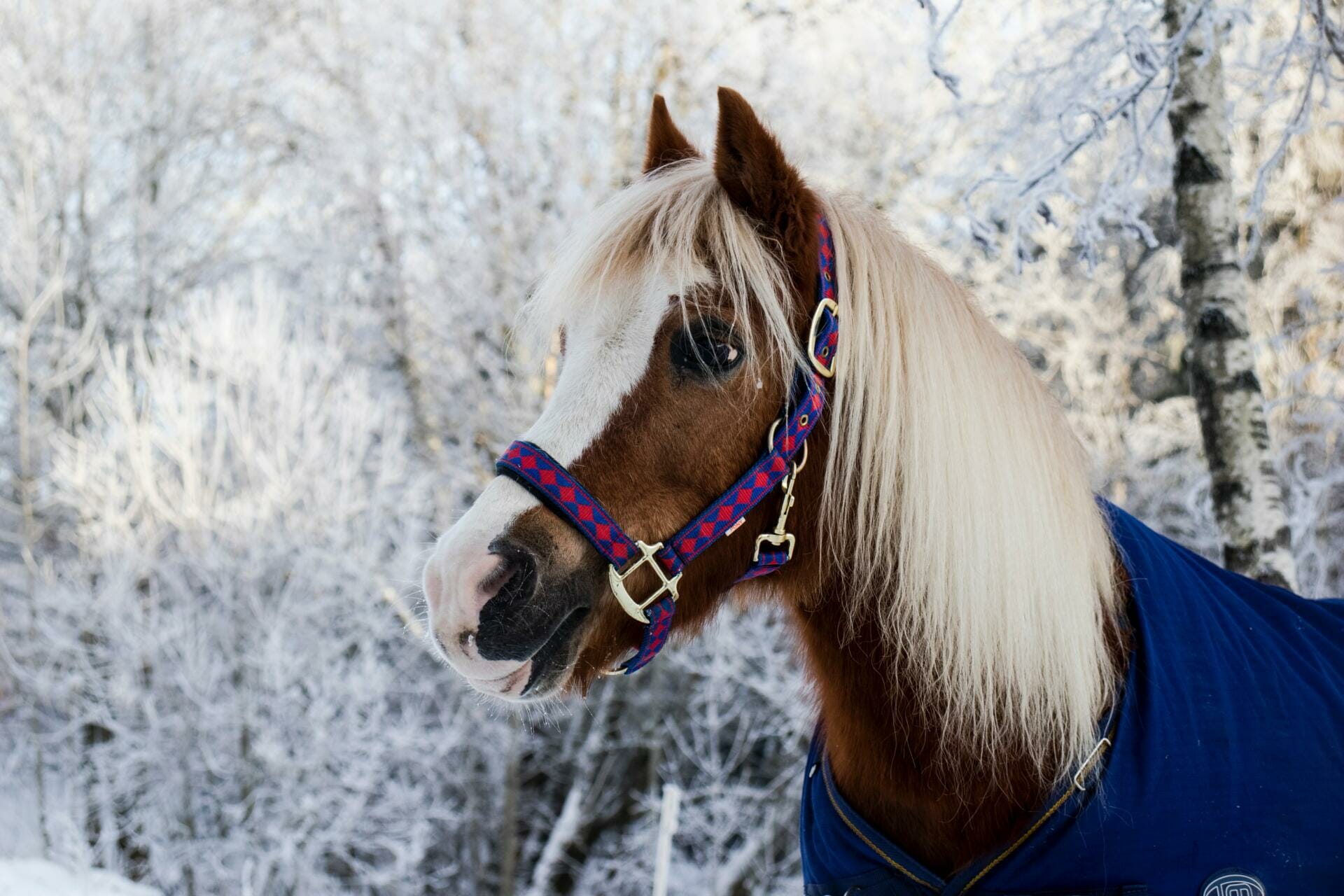
Winter can be a tricky time of year for feeding horses, especially if you have older horses or horses that lose weight easily. Feeding the right diet during winter will help keep your horses healthy and in good body condition. Here are some tips on how you can do it:
Use late summer and autumn while the temperatures are still comfortable and the pasture and hay quality still high to get your horse in good shape for winter. All horses during this period need to be fed a balanced diet (more on this soon) to make sure they are generally healthy and their immune systems fully functional.
If your horse tends to lose weight over winter it can be fed a little more than normal during this time to get a bit of extra condition on them, so if they lose weight during winter, they won’t end up being too skinny.
You should also be looking to buy hay in summer as availability and quality are high but demand is lower meaning you will get a good quality product for less than you will pay in winter.
Forage (hay, chaff and pasture) provides your horse with many of the calories they will need to maintain weight during winter. Aside from that, forage will keep your horse warm in winter. During the digestion of forages in the horse’s gut, bacteria ferment the fibrous portions. One of the ‘by-products’ of this fermentation is heat, and it is this heat that really helps a horse to stay warm during winter.
Because of the ‘warming’ properties of forage, your horse will benefit more from an additional feed of hay than an extra feed of grain, pellets or sweetfeed in very wet, cold weather.
Don’t throw a rug on your horse in winter and leave it on for weeks on end without taking it off to check your horse’s body condition (and of course that it doesn’t have any injuries or sores that are covered by the rug). Condition scoring involves looking at areas on your horse’s body such as the top of the neck, the wither, over the ribs and over the loin to assess the amount of body fat (which we call body condition) your horse is carrying. For more information on Body Condition Scoring, click here to see our post ‘Why Body Condition Score’.
At the very least, take your horse’s rug off every week so you can check to see if your horse is losing, maintaining or gaining weight.
Because you will be condition scoring your horse regularly you will know if your horse is maintaining, gaining or losing weight. Depending on what you want your horse to be doing, you may need to adjust the diet to keep your horse at the bodyweight and condition you want.
If your horse is gaining unwanted weight, you will need to reduce or remove high energy feeds like grains, pellets, sweetfeeds or oils in the diet. If your horse is losing weight that you don’t want him to lose, you may need to feed more calories in the diet. You can do this by:
An unbalanced diet doesn’t meet your horse’s requirements for each of energy, protein, vitamins and minerals so your horse won’t be as healthy as he could or should be. Nutrient deficiencies can lead to:
While traditionally, knowing if what you were feeding was meeting your horse’s requirements was quite hard, the FeedXL Horse Nutrition Calculator makes it very easy to see if what you are feeding is the right thing for your horse. FeedXL will also help you manage your horse’s bodyweight. Click here to learn more and get started now!
For horses susceptible to laminitis (including overweight horses, horses with Cushing’s Disease or those who have previously had laminitis) winter can be a danger period.
If your horse is at risk, you should:
Beware: Most feeds that claim to be grain free are NOT. Read the label of all feeds carefully. If they contain anything like bran, pollard, millmix or millrun do not feed them to a horse prone to laminitis. By ticking the ‘Laminitis’ box on your horse’s details page in FeedXL, all of the unsuitable feeds that contain grains or grain by-products will be coloured red and you will be warned not to use them.
To learn more about feeds labelled ‘grain free’ that are actually not, click here to read our post ‘Grain Free Horse Feed: What Does It Actually Mean?‘
A horse’s coat can become dry and dull during winter. To help keep the coat and skin healthy, add 1/4 cup of oil to the diet.
Of course, all the normal rules of good horse husbandry apply in winter. Feeding a well-balanced diet in conjunction with good dental, hoof and veterinary care as well as a strict worming regime will help keep your horses in top shape over winter.
Join FeedXL today and take control of your horse’s nutrition
Get EVEN MORE practical and personalised feeding guidance when you sign up to FEEDXL.
SIGNUP TO FEEDXL NOW
We would love to welcome you to our FeedXL Horse Nutrition Facebook Group. Ask questions and have them answered by PhD and Masters qualified equine nutritionists and spend time with like-minded horse owners. It’s free!
Click here to join the FeedXL Horse Nutrition Facebook Group