Is Your Horse Getting What They Need?
With the change of season, now is the perfect time to check that your horse’s diet is covering all the essentials. With changes in pasture quality—both in volume and nutritional value—it’s more important than ever to ensure your horse is getting everything they need to stay healthy and thrive.
One of the most critical areas to focus on is vitamins and minerals. But how do you know what your horse actually needs? And why does it matter so much?
The Hidden Danger of Mineral Deficiency
Mineral deficiencies, especially long-term ones, are one of the most common yet overlooked issues in equine nutrition. These deficiencies often develop silently, with no immediate signs, until something goes seriously wrong.
Think of it like termites in a house—you often don’t notice they’re there until the structure is already compromised. The same goes for nutritional deficiencies. Just because you can’t see them doesn’t mean they’re not doing damage. And once the signs become obvious, the issue may already be severe.
If you’re not supplementing your horse with the right nutrients—either through fortified feeds or carefully chosen supplements—there’s a high chance they are lacking something essential. And that deficiency could eventually lead to serious health problems.
Common Symptoms of Deficiency
Vitamin and mineral deficiencies can show up in many ways. Here are some examples:
These symptoms may take months or even years to become visible, which is why prevention is so important. Unfortunately, we often jump to treat symptoms—like adding joint or calming supplements—without addressing the real cause: poor nutrition.
Nutrition Comes First
Good nutrition should always be the foundation of your horse’s care. There’s little point giving a joint supplement if the horse is chronically deficient in copper and zinc, two minerals essential for joint health. Nearly every horse will require some level of vitamin and mineral support. Without it, imbalances are almost inevitable—and so are the consequences.
So, what nutrients are essential, and what do they actually do?
Key Vitamins and Their Roles
Essential Minerals
Prevention is Easier Than the Cure
The good news? All of these issues are preventable.
Rather than spending months—and often thousands of dollars—trying to fix problems caused by deficiencies, you can prevent them altogether with the right approach to nutrition. It starts with knowing exactly what your horse needs and making sure those needs are met.
That’s where FeedXL comes in. It helps you accurately assess your horse’s diet and identify any nutrient gaps. You can see which vitamins and minerals are missing and get clear, data-based suggestions for which feeds or supplements (out of the thousands available) will best meet those needs.
It also prevents over-supplementing “just in case,” which is a common and expensive mistake. At best, it wastes money—at worst, it can lead to toxicities just as harmful as deficiencies.
Final Thoughts
Just because you can’t see a nutritional problem doesn’t mean it isn’t there. And the longer it goes unnoticed, the more damage it can do. Reviewing your horse’s diet now —could be one of the best things you do for their long-term health and performance.
Don’t wait for the warning signs. Give your horse the nutritional foundation they need to stay strong, happy, and healthy.
When it comes to your horse’s joint health, you may turn to supplements to provide essential nutrients that support mobility, flexibility, and overall joint function. But how do you know if your horse’s joint supplement is doing all that it can? FeedXL allows you to analyse the nutrient content of your horse’s diet, including joint supplements, to ensure they meet your horse’s specific needs.
Glucosamine is one of the most popular ingredients when it comes to joint health. Not only does it provide the building blocks for synthesis of glycosaminoglycans (including chondroitin sulfate and HA), which are key to healthy cartilage, it’s also thought to play a role in inhibiting the breakdown of cartilage. It can appear as both glucosamine hydrochloride (HCl) or glucosamine sulfate (SO4) on supplement labels, but there is no conclusive evidence on which form is more bioavailable.
Chondroitin sulfate may support a normal cartilage inflammatory response by playing a role in inhibiting the effects of various enzymes that degrade cartilage. Known as a “building block” of hyaluronic acid and proteoglycan, you’ll often see it in combination with glucosamine in joint supplements.
Hyaluronic Acid (HA) is an integral component of joint fluid and articular cartilage. HA provides lubrication for the joint and helps maintain the correct viscosity of the joint fluid.
Methylsulfonymethane (MSM) plays an important role in forming protein, immunoglobins, certain enzymes, and connective tissues such as tendons and ligaments. It’s often found in joint supplements because of its properties as an antioxidant as well as a way to support a normal inflammatory response.
Trace minerals, including copper and manganese, are incorporated into the building blocks responsible for healthy joint structure and function. Healthy copper levels help support normal connective tissues, cartilage, bones, and hooves. Manganese helps form chondroitin sulfate, which in turn supports healthy bones and joints.
Vitamin C, an antioxidant, plays an important role in collagen synthesis and is an important part of the production of healthy tendons, ligaments, and bones. While horses produce their own Vitamin C, factors such as age, stress, and underlying health conditions may cause a horse to need more than they can produce on their own. Click here to read more on Vitamin C.
Omega 3 fatty acids help mediate inflammation throughout the body. Horses need a balanced ratio of omega 3 to omega 6 fatty acids and due to modern horse keeping conditions such as reduced pasture intake and feeding fortified grains, many horses may be unbalanced in this area. To learn more about the role of omegas in your horse’s diet, be sure to read our blog: Omega 3s for Horses
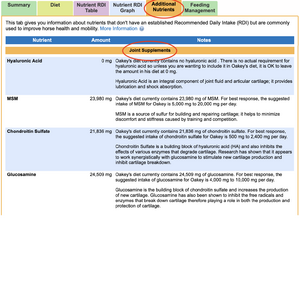
If you’re a FeedXL member and using a joint supplement, get the most out of your membership by using our Premium plan. Add any joint supplement to your horse’s diet and get a breakdown of the amount of each joint nutrient provided by that supplement and see if that falls within the suggested supplementation range for best results.
Since there are no established recommended daily intakes (RDIs) for these nutrients, FeedXL provides you with a range for suggested intake based on various studies.
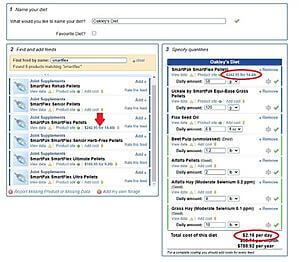
You can also use FeedXL to browse the list of joint supplements available on the market, add them to your diet, and check to see what nutrients they supply and at what levels.
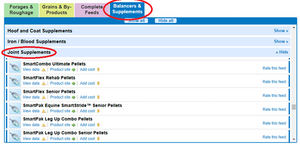
Adding costs can also be a great way to find a joint supplement that not only provides your horse with what they need but also fits your budget.
Research on joint supplements, their ingredients, and their efficacy is an ongoing area of study. It’s important to remember that while certain key ingredients may play a role in healthy joint function, if it sounds too good to be true, it probably is. When it comes to supplements or companies making claims to “treat,” “cure,” or “heal” things, be sure to maintain a healthy amount of scientific skepticism. For more on the research on joint supplements, click here.
Selenium is a crucial trace element required in minute quantities, yet it plays a vital role in various physiological functions for all living beings, including our cherished horses. Selenium plays an important role in immune response, growth, and fertility, among other functions, and thus highlights its significance for equine health.
Given that the minimal daily requirement of Selenium is in milligrams, it becomes essential to carefully manage its supplementation to prevent deficiencies or excesses. This emphasizes the need to understand the Selenium content in the main ingredient of your horse’s diet – forage. Knowing at least the approximate Selenium levels in forage aids in fine-tuning overall dietary plans and supplementation to maintain a minimum but safe Selenium level.
The most reliable method to determine Selenium level in your forage is to get a forage analysis. A list of laboratories worldwide that offer forage analysis services for equines can be found at https://feedxl.com/lab-list-resource/. If you are hesitant to test every batch of hay or every pasture sample for Selenium, note that soil Selenium stays relatively consistent through time (unless a fertilizer is applied). This means that if the forage is harvested continuously from the same field, testing even just every 3 years will give you a reliable Selenium estimate to be used for the forage.
We understand that it isn’t always feasible or practical to obtain a forage analysis, and purchased forage doesn’t always come with a forage test that includes Selenium. In such cases, FeedXL provides a range of generic forages with average analysis values that you can use when preparing your diets. FeedXL provides these generic forages in a range of Selenium levels – Low, Moderate, or High – letting you choose based on what is most likely in your forage. But how do you know which to choose? One option is to inquire with the forage grower or seller about the soil Selenium levels where the forage was grown, as soil Selenium levels greatly influence the Selenium content of the forage. Forage growers will be fertilising their forage crops from soil tests and may have more detailed information about the Selenium levels in the fields where forage is harvested, providing valuable information that you can use to select the approprtiate Selenium levels in FeedXL. If information about the soil Selenium level is unavailable from the grower or seller, knowing the location the forage was grown can still be useful! You can for example reach out to a local Agronomist, University or Extension or optionally do research online for soil Selenium maps such as this one for United States: https://mrdata.usgs.gov/geochem/doc/averages/se/usa.html (accurate to county level and includes min, max and average values)
Lastly, if you are not able to obtain the information with any of the options given above, and you are worried about the level of Selenium in your horse’s diet, select the ‘Moderate’ Selenium level forages when building your diets in FeedXL, and monitor selenium status via blood testing. Selenium is one of the few nutrients whose concentration in blood can reflect with reasonable accuracy what is supplied in the diet. We are happy to help you interpret the results and adjust the diet accordingly. If you have any questions regarding Selenium or need help determining the right Selenium level, our Nutrition Team is here to help. Feel free to reach out and tap into our expertise!
We would love to welcome you to our FeedXL Horse Nutrition Facebook Group. Ask questions and have them answered by PhD and Masters qualified equine nutritionists and spend time with like-minded horse owners. It’s free!
Click here to join the FeedXL Horse Nutrition Facebook Group

The name ‘Vitamin K’ refers to a group of fat soluble vitamins that include:
Vitamin K is required for many functions in the body. The most important of these are:
The true requirement for vitamin K in horses is still unknown. Primary vitamin K deficiency (i.e. nutritional deficiency not caused by a vitamin K antagonist) has never been recorded in a horse.
Published information suggests that the absorption of vitamin K from fresh forages and absorption of vitamin K produced by bacteria in the gut is enough to meet requirement. However, recent studies have called into question the ability of a horse to absorb bacterial derived vitamin K2 from the hindgut1. Still, there are many bacteria in a horse’s small intestine and vitamin K is definitely able to be absorbed from there.
However, horses in stable conditions without access to fresh green forage may not receive optimal amounts of vitamin K in their diets. In these situations, some supplementation may be required.
There has been some debate in recent times regarding which form of vitamin K is best to supplement with. In horses, it appears that most forms of vitamin K are suitable for supplementation.
A study in horses published in the Journal of Animal Science (Terachi et al 2011)2 found that supplementation with Vitamin K3 (the form most commonly used in horse feeds) was the most effective at increasing blood concentrations of the biologically active menaquinone, MK-4.
A more recent study3 has suggested that vitamin K3 is not converted to MK-4. However this study used a single dose of vitamin K3, with blood samples only taken for 8 hours post-dosing. This is in contrast to the Terachi et al. study which supplemented horses for 7 days and found the highest levels of MK-4 in the vitamin K3 supplemented horses. It is likely that in the study of Skinner et al, the single dose of Vitamin K3 and the short time-frame for blood sampling may not have allowed enough substrate or time for conversion to MK4 to occur.
Vitamin K3 has been demonstrated to be converted to biologically active MK-4 in multiple animal species and it would appear horses are no exception.
We would love to welcome you to our FeedXL Horse Nutrition Facebook Group. Ask questions and have them answered by PhD and Masters qualified equine nutritionists and spend time with like-minded horse owners. It’s free!
Click here to join the FeedXL Horse Nutrition Facebook Group
There is a plethora of different electrolyte supplements on the market! Pastes, powders, liquids – and they are all so different… making it really hard to know which ones are best.
The job of an electrolyte supplement is to replace the electrolytes lost in your horse’s sweat… namely sodium, chloride and potassium (the three major ones) as well as magnesium and calcium.
For an electrolyte to do a good job of replacing the electrolyte minerals your horse loses when sweating, it should be at least 80% ‘salts’ and 20% or less glucose or other base or filler.
Specifically, these high-quality products should be 20 – 25% sodium, 43 – 48% chloride, 10 – 12% potassium and also have smaller amounts of magnesium and calcium (normally 1 to 2%).
If you put one of these high-quality products into FeedXL, for a 450 kg (990 lb) horse in very heavy work, at a dose of 60 grams per day, this is how it should look (with JUST it in the diet):
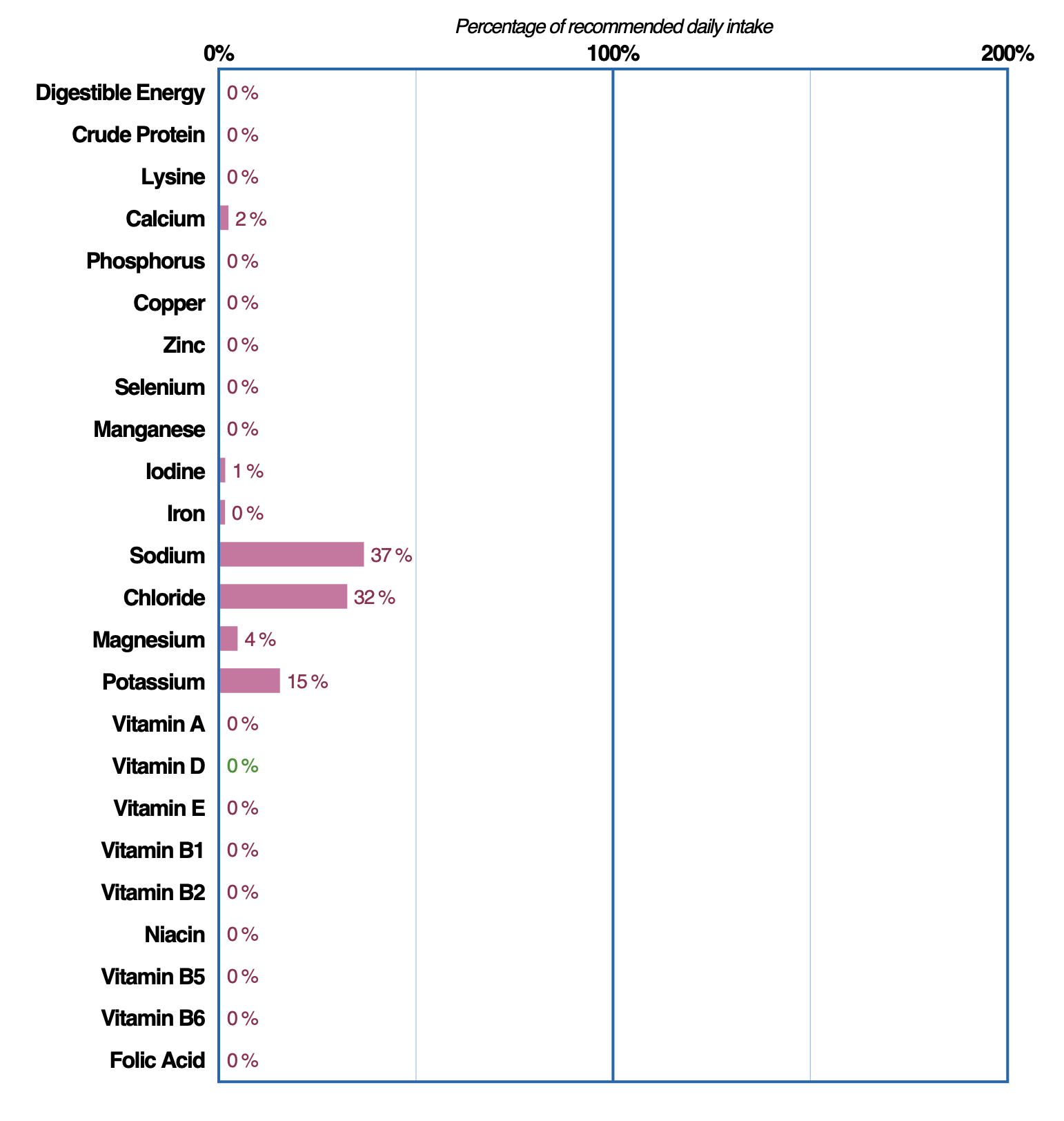
This product is 22.5% sodium, 45.1% chloride, 12.1% potassium, 1% magnesium and 1.5% calcium.
To give you a comparison, here is another product, also added in FeedXL at a 60 gram dose for a 450 kg (990 lb) horse in Very Heavy Work … look how much less mineral you are getting at the same dose rate!
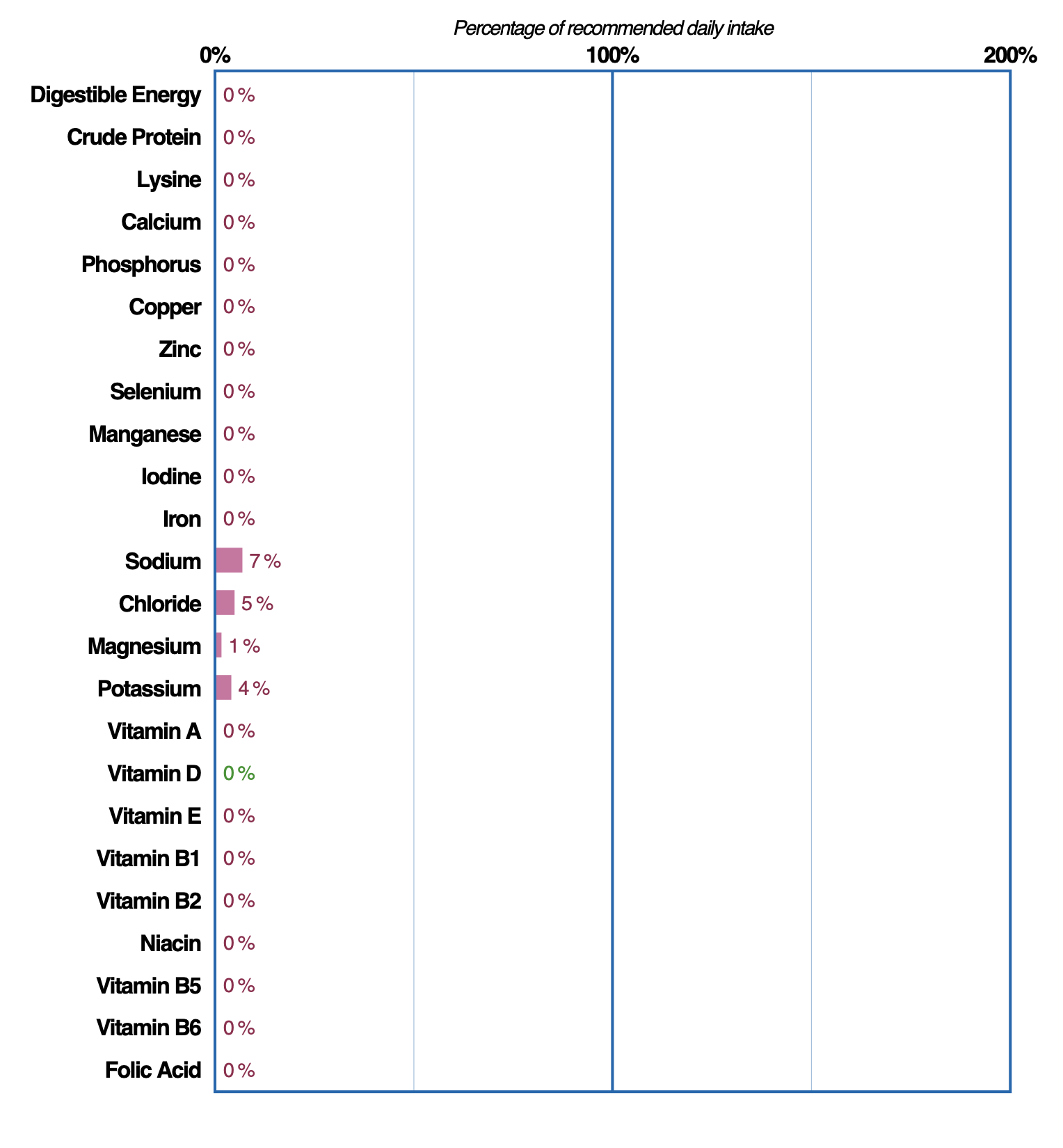
If the mineral levels are much lower like this, you’re probably paying a lot for a lot of filler and it might be time to consider a new supplement!
It can be a little tricky to read labels because everyone presents their label information a little differently (just to keep us on our toes!)… so if you want to check how good your electrolyte is, create a diet in FeedXL like this, for a 450 kg (990 lb) horse in Very Heavy Work, add 60 grams of your chosen electrolyte and see how it compares to these ones… the one at the top being good, the one at the bottom being a waste of money!
We hope that helps you to find the best electrolyte supplements! If you haven’t yet got started with FeedXL you can join us here.
P.S. Be really careful not to overfeed salt and electrolytes because they will make your horse’s feed taste yuk and your horse will stop eating. If your horse is not eating well, try reducing or even for a short period removing any salt or electrolyte from the feed and see if this helps. For more on keeping your horse eating, you can read this post.
We would love to welcome you to our FeedXL Horse Nutrition Facebook Group. Ask questions and have them answered by PhD and Masters qualified equine nutritionists and spend time with like-minded horse owners. It’s free!
Click here to join the FeedXL Horse Nutrition Facebook Group
Sulfur is a critical part of all proteins and horses need it to create protein, particularly the protein of their hooves and hair!
If sulfur in your horse’s diet is so important, why isn’t it included in FeedXL?
We don’t include sulfur in horse diets in FeedXL because the chance of a deficiency is virtually zero. Forages contain enough sulfur, so that even if intake was reduced to just 1% of bodyweight, maintenance requirements would still be met.
It is possible that a diet based on straw could become sulfur deficient, but as long as you use FeedXL to make sure protein requirement is met, the assumption is that sulfur requirement will also be met.
By feeding the right amount of forage, you should be able to meet your horse’s sulfur requirement. Check out our blog on how much forage your horse really needs.
Interested in learning about protein and how it’s quality affects your horse? Read more in our blog Understanding Protein Quality
We would love to welcome you to our FeedXL Horse Nutrition Facebook Group. Ask questions and have them answered by PhD and Masters qualified equine nutritionists and spend time with like-minded horse owners. It’s free!
Click here to join the FeedXL Horse Nutrition Facebook Group
What exactly is Vitamin B12 and why do horses need it?
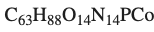
Here is something (nerdily) interesting… the molecular formula for Vitamin B12. It is the ‘biggest’ of all of the vitamins and yet required in the diet in the smallest amounts.
It contains the mineral cobalt which constitutes somewhere around 5% of its weight.
The only reason a horse needs cobalt in its diet is to allow their gut bacteria to produce Vitamin B12!
Researchers currently don’t know how much of this key nutrient horses actually need.
And… it appears that natural levels of cobalt present in forages and other feedstuffs is enough to meet a horse’s cobalt and therefore Vitamin B12 requirement.
It is important to keep in mind however that a horse’s gut bacteria population needs to be healthy if your horse is going to have the capacity to produce enough B12
Your horse’s diet is going to determine how well the gut bacteria can make this vitamin for your horse. In cattle, it has been shown that a high forage diet supported the production of 3 times more vitamin B12 than a high starch diet!
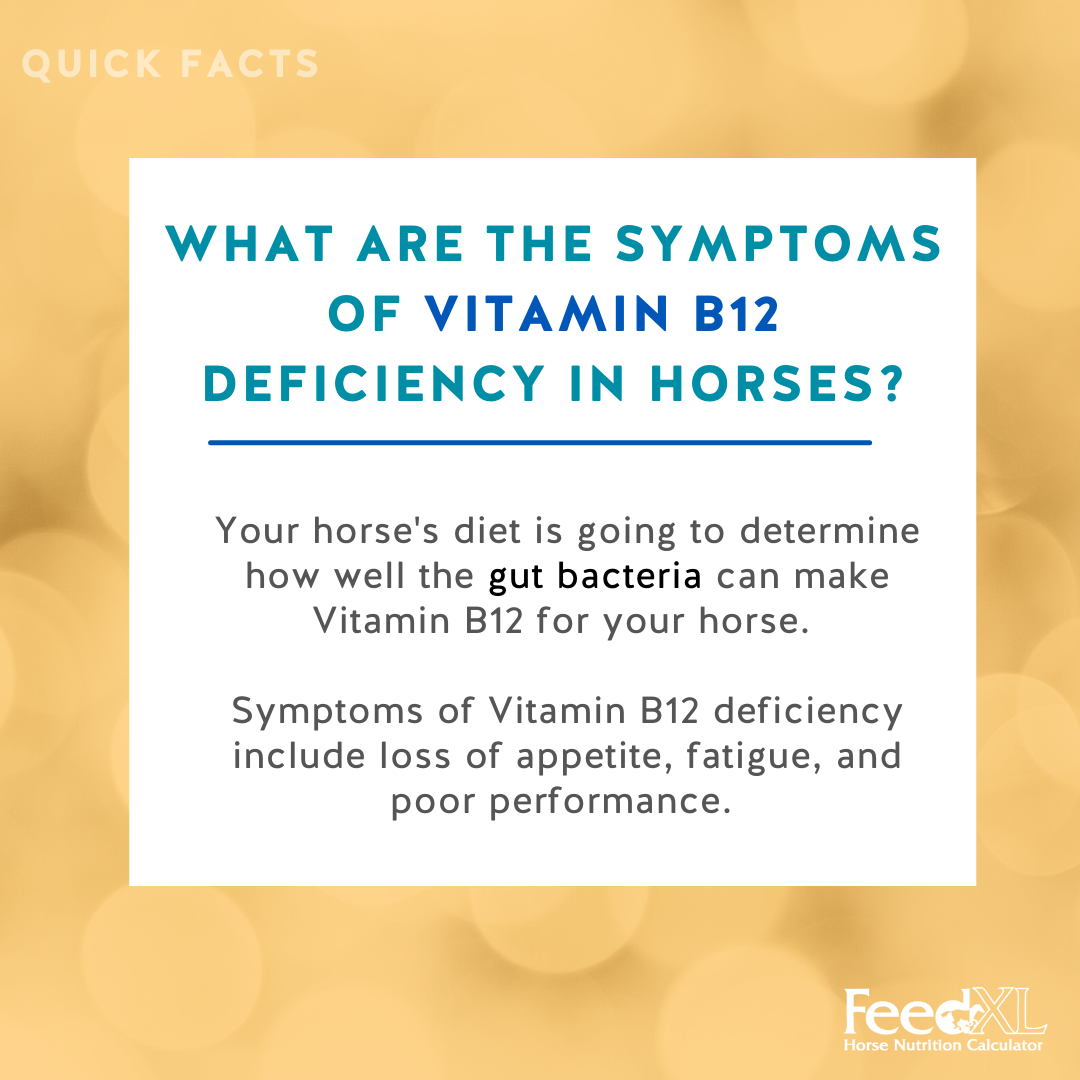
Loss of appetite is one symptom of a vitamin B12 deficiency. Fatigue and poor performance will also occur when a horse is deficient.
Horses receiving adequate cobalt (which it appears they should do just from their forages) AND with a healthy hindgut, shouldn’t need additional vitamin B12 in their diet.
For information on how you can keep your horse’s hindgut healthy (and therefore vitamin B12 production at a maximum) see our article Keeping The Hindgut Healthy.
We would love to welcome you to our FeedXL Horse Nutrition Facebook Group. Ask questions and have them answered by PhD and Masters qualified equine nutritionists and spend time with like-minded horse owners. It’s free!
Click here to join the FeedXL Horse Nutrition Facebook Group

The answer is the reason why so many of us don’t just have problems with our horses, we have disasters. Mineral deficiency, especially chronic, long-term deficiency, is a huge issue in horse nutrition and tends to go unnoticed until something goes horribly wrong.
The best analogy is to think about pests like white ants – their presence often goes unnoticed until they have done so much damage to the structure of the building that things literally start to fall apart. Once you can see the damage, the issue is serious.
Which means that just because you can’t see a mineral deficiency in your horse doesn’t mean that one doesn’t exist. In fact, if you are not supplementing your horse correctly, either with carefully chosen fortified feeds or vitamin/mineral supplements, it is almost certain that your horse will be deficient in something that will eventually cause a health issue.
The good news is that all of these nutrition-related deficiency issues are so easily avoided. Instead of spending several months (and often several thousand dollars) fixing the problems caused by the deficiency, you can just prevent the deficiency and therefore prevent the issue.
This list could go on and on and these symptoms may take several months or years to show up, but will cover many of the issues that you will see. Unfortunately, we also often try to treat the symptom before we treat the underlying cause. So good nutrition must always go hand in hand with any treatments given to these horses. For example, it’s virtually no use using a joint supplement when a diet is chronically copper and zinc deficient. Every horse’s diet, almost without exception, needs some sort of vitamin and mineral support. And if they don’t receive that support, one or more of these issues will start to show up in your horse.
This is where FeedXL comes in. FeedXL helps you figure out exactly which vitamins and minerals are missing from the diet, and exactly which feeds or supplements (out of the thousands of options that you have) can be used to best meet those needs. It also stops us doing that thing where we overfeed or over-supplement “just in case” – at best this leads to wasting money and at worse ends in equally disastrous vitamin or mineral toxicity.
The moral of the story? Just because you can’t see a problem doesn’t mean there isn’t a problem. The sooner you look at your horse’s diet and fix any vitamin or mineral deficiencies, the better.
New to FeedXL? Click here to learn more about our horse nutrition calculator and get started today.
We would love to welcome you to our FeedXL Horse Nutrition Facebook Group. Ask questions and have them answered by PhD and Masters qualified equine nutritionists and spend time with like-minded horse owners. It’s free!
Click here to join the FeedXL Horse Nutrition Facebook Group
People love to disagree over the use of magnesium oxide for horses. Should we use it, shouldn’t we use it, is it bioavailable or not for horses?
Is all magnesium oxide created equal?
Part of this contention is due to the fact that magnesium oxide is a manufactured ingredient. It is cooked in a process called calcination that reacts magnesite with oxygen to create magnesium oxide.
Like all things, it can be made well, or it can be made poorly, and this then impacts on whether it will be bioavailable or not. Ingredients like calcium carbonate (limestone) are mined and therefor generally always the same.
Do your research
When reading about magnesium oxide for horses, keep in mind that most studies do not report the conditions under which it was manufactured OR its final particle size, both of which have a huge impact on final bioavailability.
Quality magnesium oxide is a very useful source of magnesium for horses, but we recommend doing your research and being very particular when it comes to where it comes from and how it is produced.
We have information on various sources of magnesium for anyone who would like to read some more here: https://feedxl.com/36-which-form-of-magnesium-is-best/
And for anyone who loves details, this is a now old but still informative paper on this subject (Beede et al 1992). It is a Dairy paper but talks in detail about factors affecting magnesium oxide bioavailability: https://animal.ifas.ufl.edu/apps/dairymedia/dpc/1992/Beede.pdf
Time to try FeedXL?
Get EVEN MORE practical and personalised feeding guidance when you sign up to FEEDXL.
SIGNUP TO FEEDXL NOW
We would love to welcome you to our FeedXL Horse Nutrition Facebook Group. Ask questions and have them answered by PhD and Masters qualified equine nutritionists and spend time with like-minded horse owners. It’s free!
Click here to join the FeedXL Horse Nutrition Facebook Group
Dietary iron is thought by some to contribute to the incidence of laminitis in horses, with serum ferritin starting to be used as the measure of iron status.
It is unclear if this is the case, but in reading human literature, it seems the relationship between serum ferritin and inflammation is a bit of a case of chicken or the egg. Lots of information shows serum ferritin is elevated in humans with inflammatory disease and/or metabolic syndrome, but it is not clear what happened first; did serum ferritin rise and cause inflammation, or did inflammation and cell damage occur and cause elevated serum ferritin?
A good place to start is with a review on serum ferritin. This article tells us that serum ferritin is actually a little protein ball, with a hollow centre where it keeps iron. Depending on how much iron is available in the body, the amount of iron inside the ferritin can vary a lot.
When serum ferritin is measured, it is the protein that is being measured, not the iron. So a serum ferritin measure tells you how many little protein balls are there but not how much iron they actually contain.
The other interesting thing to note is that ferritin is made within cells and is not made in the blood. So it seems that for ferritin to get into the blood it has to come out of the body’s cells (with very limited evidence if any, according to these authors, of any regulated ferritin secretion mechanism in mammals). This leads to the hypothesis that the elevated serum ferritin seen during inflammation is due to leakage from damaged cells into the blood.
The paper goes on to talk about the relationship between serum ferritin and liver iron stores, which are considered the gold standard for assessing body iron stores. While serum ferritin is usually related to liver iron in ‘normal humans’ that don’t have inflammatory disease, serum ferritin can both under and over-estimate liver iron stores where some form of inflammatory disease is at play.
Meaning it is not necessarily a good indicator of overall iron status. These authors suggest serum (‘soluble’) transferrin receptor (sTfR) as being much more useful.
The simple takeaway is that serum ferritin is not necessarily an indicator of iron overload from high dietary iron and may instead be an indicator of inflammation. Maybe the chicken came first… or was it the egg??
Here’s the direct link to the article mentioned above: https://pubs.rsc.org/en/Content/ArticleLanding/%202014/MT/C3MT00347G#!divAbstract
Not yet a Member of FeedXL for your horse’s health?
Get EVEN MORE practical and personalised feeding guidance when you sign up to FEEDXL.
SIGNUP TO FEEDXL NOW
We would love to welcome you to our FeedXL Horse Nutrition Facebook Group. Ask questions and have them answered by PhD and Masters qualified equine nutritionists and spend time with like-minded horse owners. It’s free!
Click here to join the FeedXL Horse Nutrition Facebook Group