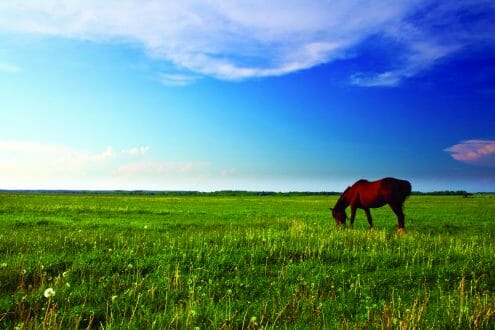
As temperatures warm up heading into spring or cool down heading into autumn you will start to notice your pastures changing as temperature and moisture conditions change. In spring you will usually see a rapid growth of lush pasture while in autumn, depending on the climate you may see a flush of growth similar to that of spring in warmer climates, or you may simply get a slower growth of lush pasture in cooler areas with possible early frosting. While this new growth is usually a welcome sight and means horses are able to return to or remain out on pasture, this new growth pasture can present some unique problems for horses.
Spring and autumn are well known as ‘danger times’ for laminitis and it is not uncommon to find more horses with diarrhoea, behavioural problems and colic during these periods. So, what is it about pastures growing during these seasons that make them unique and how can they be managed?
Lush spring and autumn pastures can contain as little as 15% dry matter meaning they are up to 85% water. Because of the extremely high water content of these pastures, horses need to graze for long periods and eat large amount of pasture to ingest their required amount of 90% dry matter feed. For example, a 500 kg horse grazing a 15% dry matter pasture would need to eat over 60 kg of this pasture in order to consume 10 kg of 90% dry matter feed (equivalent to 2% of bodyweight). If pasture quantity is low (for example your pasture is overgrazed) this is a major challenge for any horse and can result in horses doing poorly on lush new pastures, even though on a dry matter basis they are very high in digestible energy and crude protein.
There is also very little fibre present in pastures during these early growth stages. Fibre that remains undigested to some extent as it passes the whole way through the digestive tract is important for the normal functioning of the gastrointestinal tract and the formation of manure. Horses that are not given an additional source of fibre when on lush young grass may experience diarrhoea and are at a higher risk of colic associated with a low gut fill.
Young, lush pastures can be high in nitrates. Nitrate is irritating to the gut and one of the most common symptoms of high nitrate intake is diarrhoea that may also be associated with mild to severe colic.
Grasses in the very early vegetative stages of growth can contain as much as 25 to 30% crude protein on a dry matter basis. While for most healthy horses this doesn’t present a problem, horses in very heavy work may find that the high crude protein level adds to their digestive heat load and will also increase urine production as the body works to rid itself of the excess nitrogen. In situations where water balance is important and water isn’t always readily available (for example in endurance horses during competition), the combination of more digestive heat and increased urination can lead to an increased risk of dehydration.
Horses that are stabled overnight or during the day and allowed to graze the remainder of the time may also experience problems associated with these high levels of protein. Excess protein causes the distinct ammonia smell often detectable when mucking out stables, which in poorly ventilated areas can cause respiratory problems for the horse.

Rapidly growing pastures contain high levels of potassium and low levels of magnesium. While not proven in horses, excessive potassium can reduce the absorption of magnesium (possibly through its effect on the DCAD, or cation, anion difference of this diet which can then affect tissue sensitivity to parathyroid hormone) and increase magnesium excretion from the body. This effect is observed in other animal species including humans. This reduced magnesium absorption, increased magnesium excretion and an already low level of magnesium in the pasture is thought to cause chronic magnesium deficiency in horses. Young rapidly growing pastures can also contain high levels of nitrate which also increases magnesium excretion from the body. Other factors associated with some pastures including low levels of selenium and a high phytoestrogen content in clover dominant pastures can also exacerbate magnesium deficiency.
Magnesium deficiency (and the resulting active vitamin B1 deficiency) can cause normally quiet, calm horses to become ‘spooky’, behave erratically and become excited easily, show signs of incoordination, muscle tenseness, soreness or twitching and in severe cases may become dangerously aggressive and exhibit unusual herding behaviour. For more information on pasture induced magnesium deficiency, read our post ‘Is pasture affecting your horse’s behaviour?‘
Perhaps the condition that has received the most attention in association with spring and autumn pastures is laminitis. Green pastures use the process of photosynthesis to create non-structural carbohydrates (NSC) from sunshine, water and carbon dioxide. Under good growing conditions the plant uses these NSCs as fuel for its own growth. However, if the plant is stressed in any way or subjected to temperatures too low for growth to occur over several days, these carbohydrates will continue to be produced and will accumulate in the plants leaf and stem tissue for later use.
When horses with insulin dysregulation who are prone to laminitis graze these pastures with the high levels of accumulated NSC, laminitis can develop. Other characteristics of spring and autumn pastures may also increase the risk of laminitis for prone horses. For example, a study in cows and calves by Lentz et al (1976) found that high levels of potassium (infused as potassium chloride) caused significant elevations in plasma insulin and in the calves, this response was further exaggerated in magnesium deficient animals. So, it is possible that the high potassium content of lush pastures coupled with an induced magnesium deficiency is contributing to laminitis by causing prolonged elevations of insulin, which presumably would be worse in insulin dysregulated animals.
High levels of nitrate have also been suggested as a cause of laminitis in horses and dairy cattle, though the role of nitrates in laminitis is not clear. Pastures that are subjected to frosts or those that contain capeweed are of particular risk for nitrates, especially following application of nitrogen fertiliser.
There are some simple management techniques you can use to reduce the negative impact of spring and autumn pastures on your horse’s health, including:
Spring and Autmn pastures are a valuable source of nutrients for your horse and managed correctly they can be fed without any issues. But to know exactly what you are dealing with and to allow you to correctly balance your horse’s diet to avoid problems you should have your pasture tested to assess energy, protein, nitrate, NSC and mineral levels (a sample should be taken in the late afternoon for the NSC analysis and in the early morning for the nitrate analysis).
Armed with a full analysis you can then use this information together with veterinary advice and a ration analysis from FeedXL that uses your pasture analysis data to come up with a ration and a feeding strategy that will lessen the risk of any problems occurring. As they say, information is power and knowing exactly what you are dealing with in your spring and autumn pastures is no exception.
If you’d like some help finding a forage analysis lab, you can click here to download our free ‘Lab List’ with laboratories in Australia, New Zealand, United States, Canada and the UK.
We would love to welcome you to our FeedXL Horse Nutrition Facebook Group. Ask questions and have them answered by PhD and Masters qualified equine nutritionists and spend time with like-minded horse owners. It’s free!
Click here to join the FeedXL Horse Nutrition Facebook Group
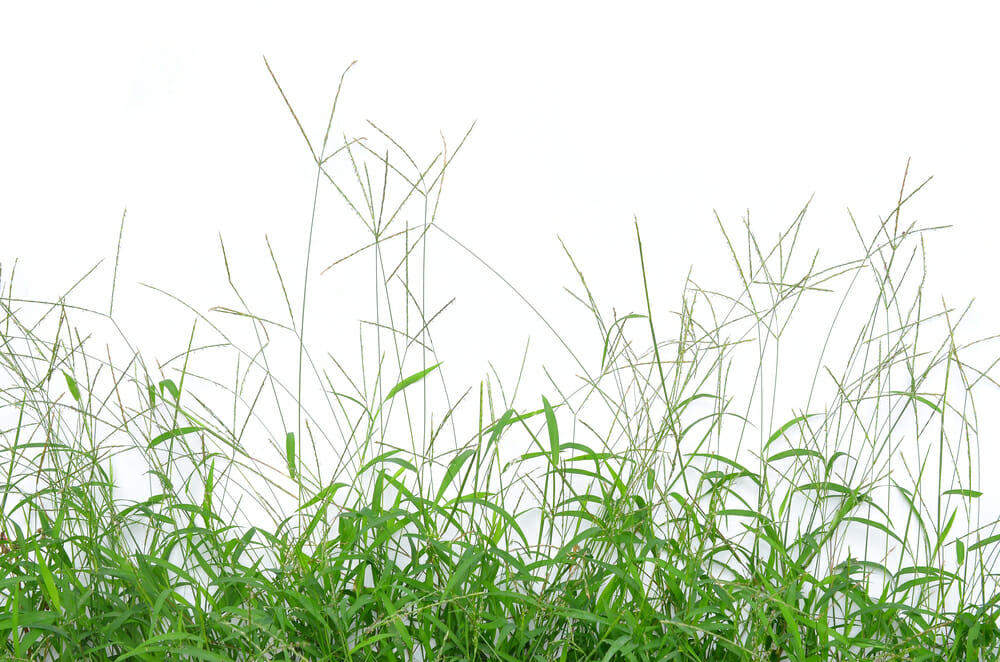
Following on from our article Identifying Pastures Part 1 that looked at how to identify grasses that could cause mycotoxin problems for horses, this blog will help you to identify grasses that have the potential to cause Nutritional Secondary Hyperparathyroidism, also known as ‘Bighead Disease’. Bighead Disease is a severe calcium deficiency and one way it can be caused is by grazing subtropical or C4-type pastures without appropriate calcium supplementation.
Subtropical or C4-Type pastures like kikuyu, bermuda grass (couch grass), buffel grass, setaria, green panic, pangola grass, guinea grass, purple pigeon grass, para grass and signal grass contain a compound known as oxalate. The oxalate in the grass binds most of the calcium available in the grass making it unavailable for absorption when the horse eats it.
So even though these grasses may contain plenty of calcium, horses cannot access it, meaning over time they will develop a severe calcium deficiency. The oxalate appears to also bind some of the calcium coming from other feed ingredients in the diet, rendering it useless to the horse as well. The more oxalate the pasture contains, the more rapidly a horse will develop bighead. Setaria, and specifically Kuzungula Setaria is the most dangerous high oxalate grass for horses, with severe bighead appearing in horses grazed on this grass species within one to 3 months.
Bighead Disease caused by pasture has traditionally been thought of as a disease of the subtropics and tropics as this is where the high oxalate pastures were first introduced for grazing cattle (cattle don’t experience the problem as the bacteria in their rumen are able to break the oxalate/calcium compound so they can absorb the calcium). However, some of the grass species that readily cause Bighead, like Kikuyu and Bermuda Grass, can grow in a wide range of environments and due to their popularity as a hardy lawn species, they are spread well into temperate climate areas.
So don’t be complacent: even if your horse lives in a temperate environment, the grasses that can cause bighead disease are widespread. Being able to identify them is important! Use this newsletter to have a wander around your paddocks to see if any of the 4 most common problem species are in your pasture.
Now it is time for you to look at some grasses to see if you have any of the 4 most common pasture species that may cause Bighead lurking in your paddocks. Use the information in Identifying Pastures Part 1 as your plant physiology reference guide (you can find this here).
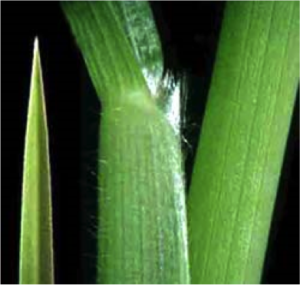
The characteristics of Kikuyu are as follows:


These images show kikuyu when it is green and growing and also almost completely dried off. Note the distinctive almost lime green colour of the grass when it is green and the dense, thick matt of stolons once it has dried off.
The characteristics of Bermuda Grass/Couch Grass are as follows:
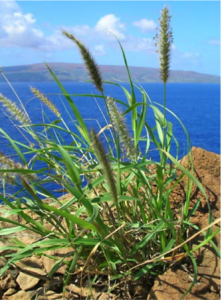
The characteristics of Buffel Grass (also known as African Foxtail, Black Buffel Grass or Rhodesian Foxtail) are as follows:
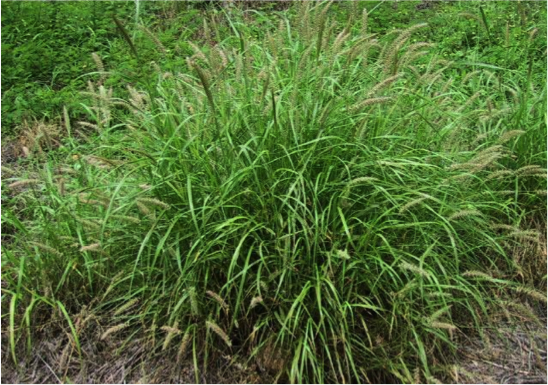
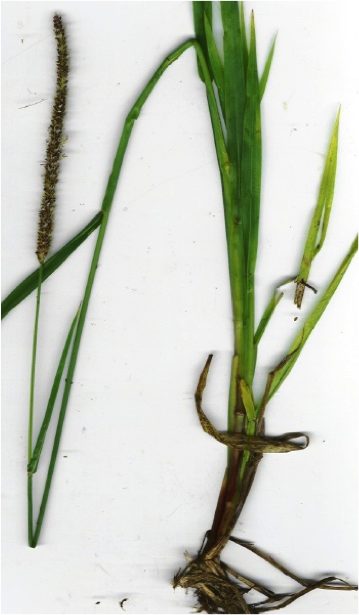
Setaria is the most dangerous of all the sub-tropical grasses for horses, so if you have it, it is important that you identify it. The characteristics of Setaria (also known as South African Pigeon Grass and African Bristle Grass) are as follows:
If you think you have these pastures but aren’t 100% sure, pot some of the plants you suspect are Buffel or Setaria and let them grow and go to seed. The seed head will help you to positively identify the species.
If you have accurately identified that Kikuyu, Bermuda Grass/Couch Grass, Buffel Grass or Setaria are present in your pasture, you will need to take this into account in your horse’s diets in FeedXL. First of all, determine what percentage of the pasture each of the species comprises, and then use the Advanced Pasture Builder feature to create a pasture that is comprised of these pasture types.
For example, if your pasture is 25% Kikuyu, 10% Setaria and 65% native grasses, use the Pasture Builder in FeedXL to create a pasture that is ‘C4-Type Grass – 25%, Setaria – 10%; and Native Grass – 65%. It is important to be accurate so FeedXL can calculate an accurate calcium to oxalate ratio for you and keep your horse out of harms way!
Once FeedXL knows these pastures are present in your diet it will warn you if the calcium to oxalate ratio of the diet is too low, putting your horses at risk of bighead, and guide you in adding additional calcium to achieve the minimum ratio required of 0.5 parts calcium to 1 part oxalate. For more information on this, please read our blog: Bighead Disease.
Diagrams and photos are from Penn State College of Agricultural Sciences https://plantscience.psu.edu/, the American Lawns website, Plants of Hawaii website, and the Informed Farmers website https://informedfarmers.com/.
Join FeedXL today and take control of your horse’s nutrition
Get EVEN MORE practical and personalised feeding guidance when you sign up to FEEDXL.
SIGNUP TO FEEDXL NOW
We would love to welcome you to our FeedXL Horse Nutrition Facebook Group. Ask questions and have them answered by PhD and Masters qualified equine nutritionists and spend time with like-minded horse owners. It’s free!
Click here to join the FeedXL Horse Nutrition Facebook Group
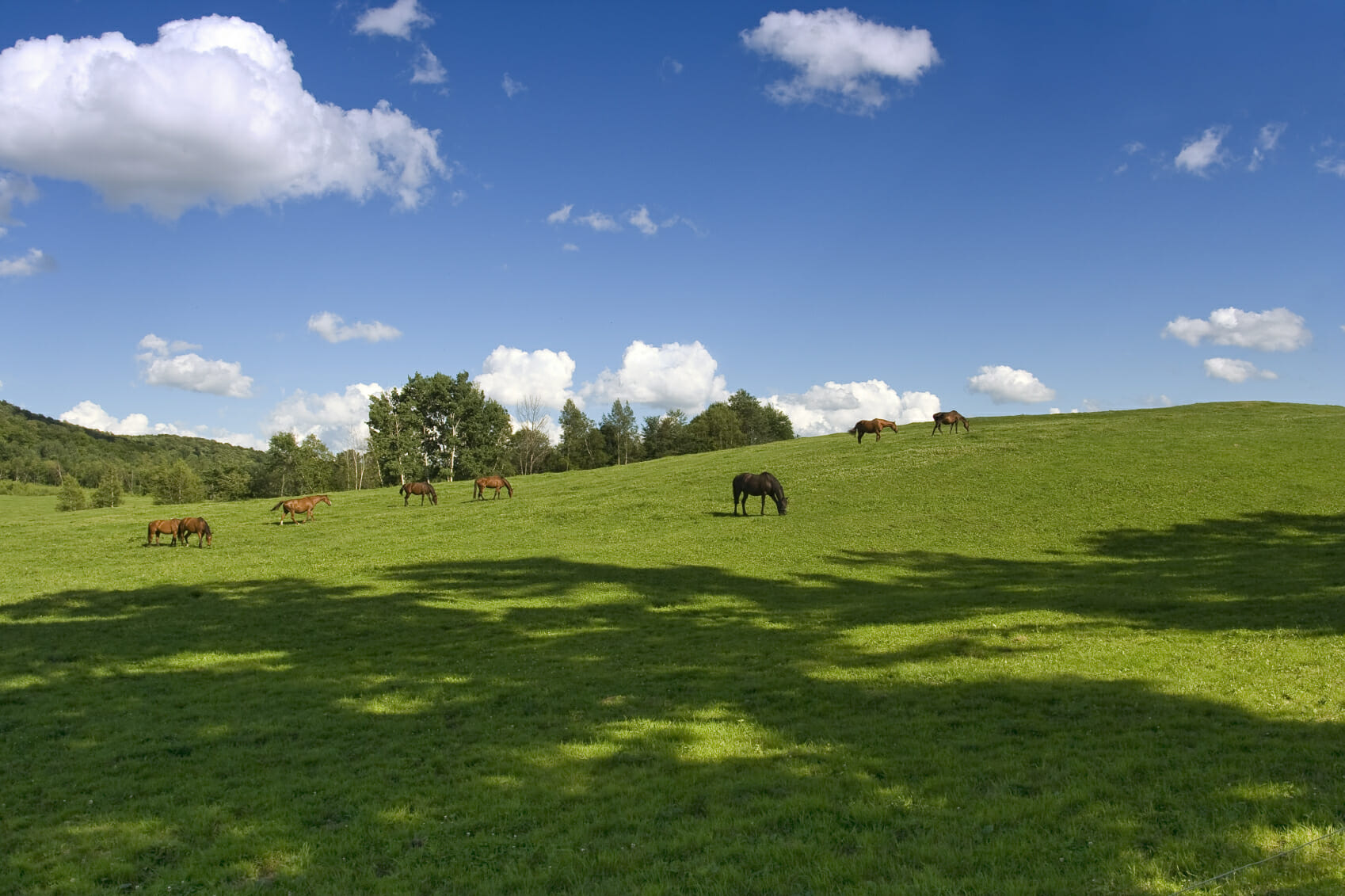
Pasture is an ideal feed base for any horse’s diet. It is an economical feed ingredient that provides an excellent source of energy, protein, vitamins and some minerals. Added to this is the benefit of the physical and mental stimulation grazing provides. Horses are born to graze.
However, some pastures can cause serious problems for horses. In Part 1 of this series, we will look at pasture plants that can cause endophyte toxicity. The two most common pasture species that can lead to endophyte toxicity are ryegrass and tall fescue.
Some species of ryegrass and tall fescue are inoculated deliberately or infected with wild endophyte fungi. The fungi then live within the plant in a symbiotic relationship where the plant provides the fungi with food and a place to live and the fungi provide the plant with protection from insect and nematode attack by producing mycotoxins.
So while the endophyte infected pastures are desirable from a pasture production perspective, the toxins they can contain can cause health problems for your horses. Horses grazing these pastures may exhibit some or all of the following symptoms (caused by the lolitrem B and ergovaline neurotoxins):
These possible symptoms are obviously very broad and many of them can be caused by any number of other factors, so you need to be very, very careful not to jump to conclusions and assume that the problems you are seeing in your horses are being caused by your pasture.
If you are observing these symptoms in your horses, the first step to knowing if they are caused by the pasture is to identify the pasture plants in your pasture sward to see if ryegrass and/or tall fescue are present. If these grasses are not present, you need to look for other causes of the problems you are seeing.
First a bit about plant physiology; there are 4 parts of the plant you can use to identify the species in your pasture:
The easiest way to identify certain plants is by finding their seed heads as grasses tend to have distinctive seed heads. Seed heads can either be in the form of a panicle, spike or receme (see below).
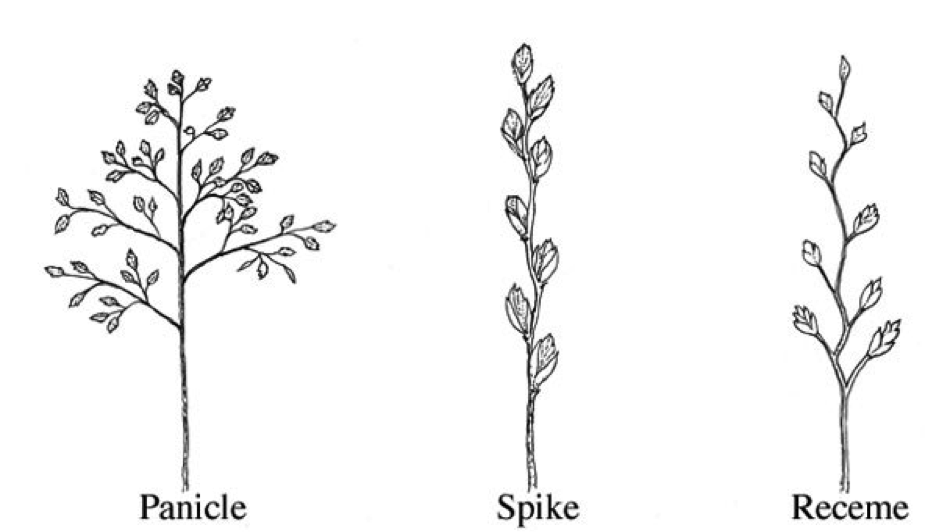
However, more often than not you will be trying to identify grasses that don’t have seed heads, so you need to use the physiology of their leaves and stem to tell them apart.
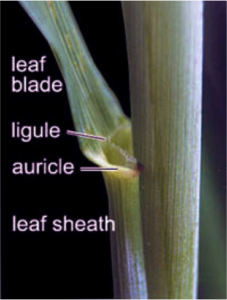
If seed heads are not present, you will need to use the structure of the leaf, auricle and ligule to identify your plants. These areas of the plant are shown in the photograph here.
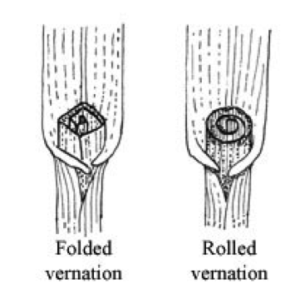
The first thing to look at with leaves is how the very youngest leaves are packaged within the shoot (called their ‘vernation’). Leaves can either be folded, appearing V-shaped in the shoot or rolled and appearing rolled in the shoot. The diagram shows both structures.
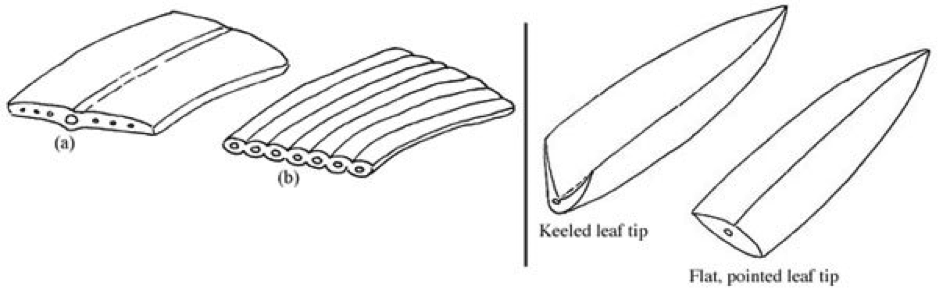
Next you should look at the leaf blades themselves. The blades can have one of a number of different ‘patterns’ in the veins. Some have one very dominant vein running down the centre of the leaf (Figure a below), others will have many equal sized veins (Figure b below). Others still have a dominant vein as well as smaller veins running in parallel. You also need to take note of how glossy or dull a leaf blade is and whether it has hairs on its upper and lower surface or not. Finally you should look at the tip of the leaf blade to see if it is ‘keeled’ or ‘flat and pointed’.
The diagram below shows some possible vein configurations and a keeled or flat and pointed leaf tip.
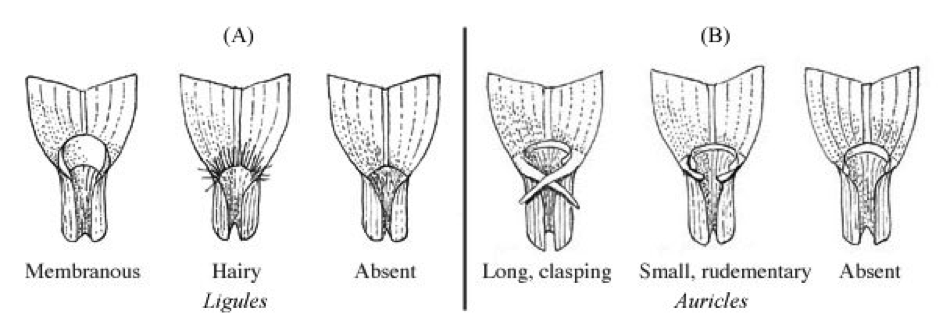
Ligules are located at the junction of the leaf blade and leaf sheath (see photo above) and can either be membranous (something like opaque cling-wrap), hairy structures or simply absent. Auricles are extensions of the collar that is also located at the junction of the leaf blade and leaf sheath. Auricles can either be long and clasping, small and rudimentary or absent. The various ligule and auricle structures can be seen below.
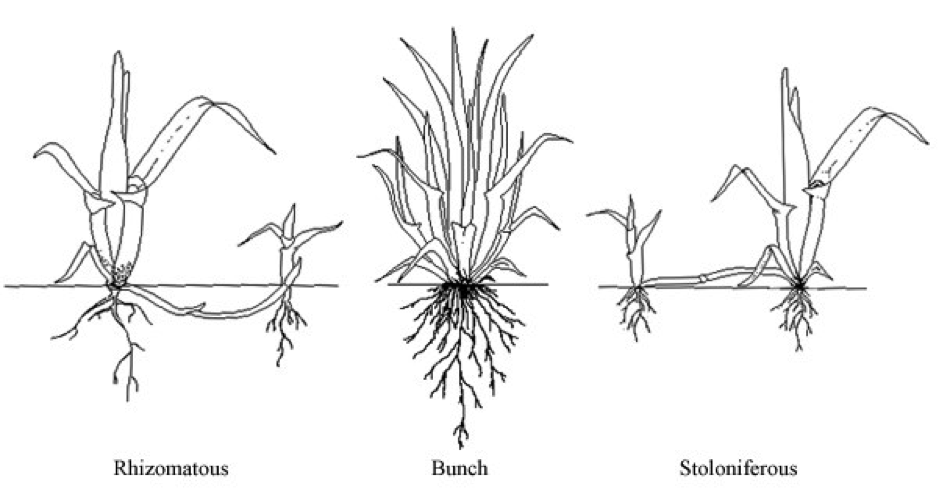
The final piece of the puzzle is to look at how the plant actually grows. Does it grow in a clump or bunch? Does it send out underground runners called rhizomes to establish new plants or does it use above ground stolons to establish new plants. These 3 growth habits are shown below.
OK, crash course in identifying pasture plants is over; it is time for you to look at some grasses. If you suspect you may have problems associated with ryegrass or tall fescue toxicity, take this Newsletter out into your pastures and see if any of the following grass profiles fit any of your grasses.
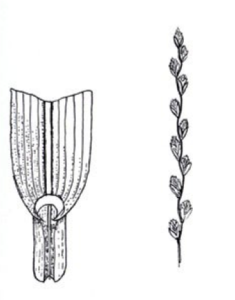
The characteristics of Perennial Ryegrass are as follows:
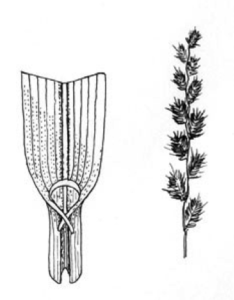
The characteristics of Annual Ryegrass are as follows:
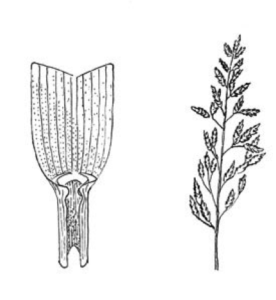
The characteristics of Tall Fescue are as follows:
If you think you have these pastures but aren’t 100% sure, pot some of the plants you suspect are ryegrass or tall fescue and let them grow and go to seed. The seed head will help you to positively identify the species.
If you have accurately identified that ryegrass and/or tall fescue are present in your pasture, this doesn’t necessarily mean that they are causing problems you may be observing as there are endophyte free varieties of both of these grasses and even endophyte infected grasses don’t always have levels of mycotoxin capable of causing issues, so you can’t jump to conclusions.
One way to check if these grasses are causing your problems is to remove your horse completely from the pasture for 5 to 7 days and watch for signs of improvement. If the problems you were seeing go away or improve, and if putting your horse back out on pasture sees them return then it is possible they are the source of your problems.
You can have your pastures tested for lolitrem B and ergovaline levels to confirm the presence of these toxins in your pasture sward. For details of laboratories who can run these analyses please email us at help@feedxl.com.
The purpose of this newsletter was to give you the information you need to identify these potentially problem grasses. Managing the toxicity caused by these pastures is too complex a topic to be covered in a short space here without doing it an injustice. Another newsletter will be written covering this topic in detail. In the meantime, if you need help, please go to the FeedXL Member Forums.
Diagrams and photos are from Penn State College of Agricultural Sciences and the Food And Agriculture Organisation. There are some useful photos of the leaves and seed heads of perennial ryegrass and tall fescue at https://www.massey.ac.nz/about/colleges-schools-and-institutes/college-of-sciences/our-research/themes-and-research-strengths/plant-science-research/pasture-plant-identification/
We would love to welcome you to our FeedXL Horse Nutrition Facebook Group. Ask questions and have them answered by PhD and Masters qualified equine nutritionists and spend time with like-minded horse owners. It’s free!
Click here to join the FeedXL Horse Nutrition Facebook Group