Following on from our article Identifying Pastures Part 1 that looked at how to identify grasses that could cause mycotoxin problems for horses, this blog will help you to identify grasses that have the potential to cause Nutritional Secondary Hyperparathyroidism, also known as ‘Bighead Disease’. Bighead Disease is a severe calcium deficiency and one way it can be caused is by grazing subtropical or C4-type pastures without appropriate calcium supplementation.
Subtropical or C4-Type pastures like kikuyu, bermuda grass (couch grass), buffel grass, setaria, green panic, pangola grass, guinea grass, purple pigeon grass, para grass and signal grass contain a compound known as oxalate. The oxalate in the grass binds most of the calcium available in the grass making it unavailable for absorption when the horse eats it.
So even though these grasses may contain plenty of calcium, horses cannot access it, meaning over time they will develop a severe calcium deficiency. The oxalate appears to also bind some of the calcium coming from other feed ingredients in the diet, rendering it useless to the horse as well. The more oxalate the pasture contains, the more rapidly a horse will develop bighead. Setaria, and specifically Kuzungula Setaria is the most dangerous high oxalate grass for horses, with severe bighead appearing in horses grazed on this grass species within one to 3 months.
Bighead Disease caused by pasture has traditionally been thought of as a disease of the subtropics and tropics as this is where the high oxalate pastures were first introduced for grazing cattle (cattle don’t experience the problem as the bacteria in their rumen are able to break the oxalate/calcium compound so they can absorb the calcium). However, some of the grass species that readily cause Bighead, like Kikuyu and Bermuda Grass, can grow in a wide range of environments and due to their popularity as a hardy lawn species, they are spread well into temperate climate areas.
So don’t be complacent: even if your horse lives in a temperate environment, the grasses that can cause bighead disease are widespread. Being able to identify them is important! Use this newsletter to have a wander around your paddocks to see if any of the 4 most common problem species are in your pasture.
Now it is time for you to look at some grasses to see if you have any of the 4 most common pasture species that may cause Bighead lurking in your paddocks. Use the information in Identifying Pastures Part 1 as your plant physiology reference guide (you can find this here).
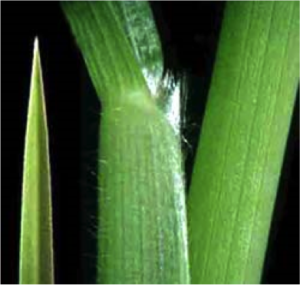
The characteristics of Kikuyu are as follows:


These images show kikuyu when it is green and growing and also almost completely dried off. Note the distinctive almost lime green colour of the grass when it is green and the dense, thick matt of stolons once it has dried off.
The characteristics of Bermuda Grass/Couch Grass are as follows:
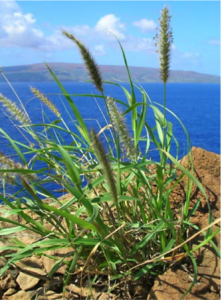
The characteristics of Buffel Grass (also known as African Foxtail, Black Buffel Grass or Rhodesian Foxtail) are as follows:
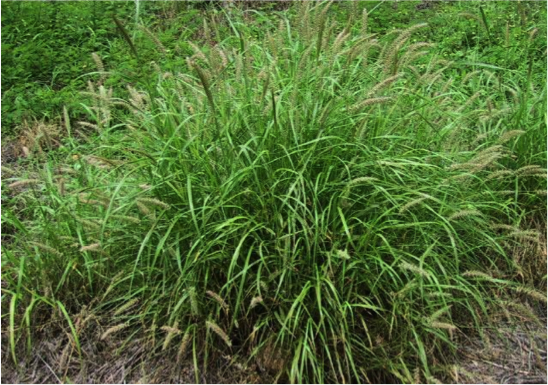
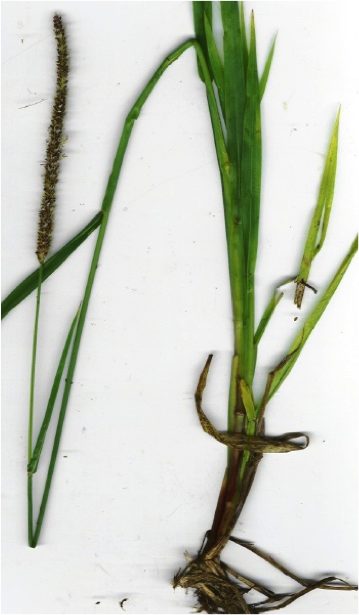
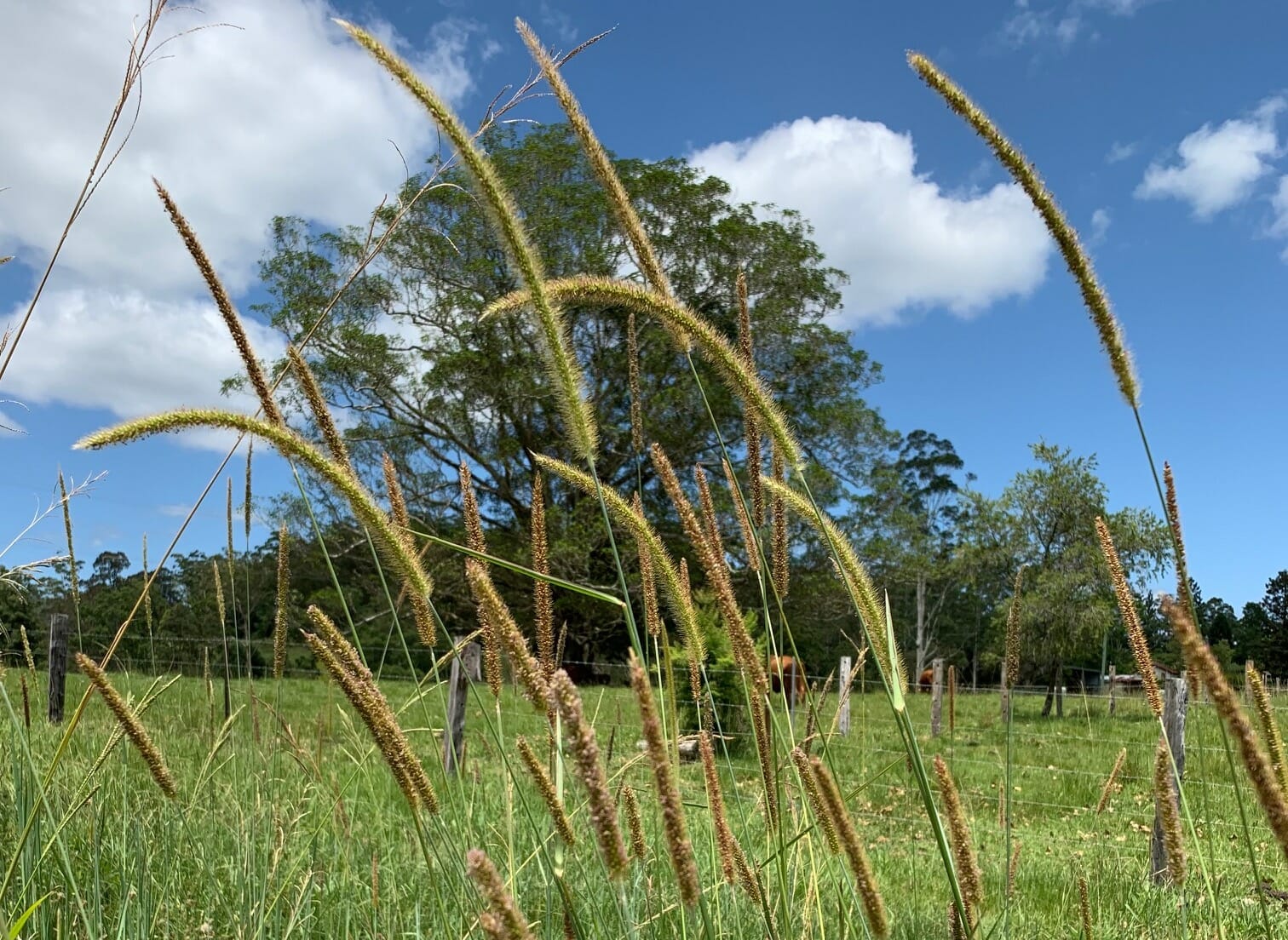
Setaria is the most dangerous of all the sub-tropical grasses for horses, so if you have it, it is important that you identify it. The characteristics of Setaria (also known as South African Pigeon Grass and African Bristle Grass) are as follows:
If you think you have these pastures but aren’t 100% sure, pot some of the plants you suspect are Buffel or Setaria and let them grow and go to seed. The seed head will help you to positively identify the species.
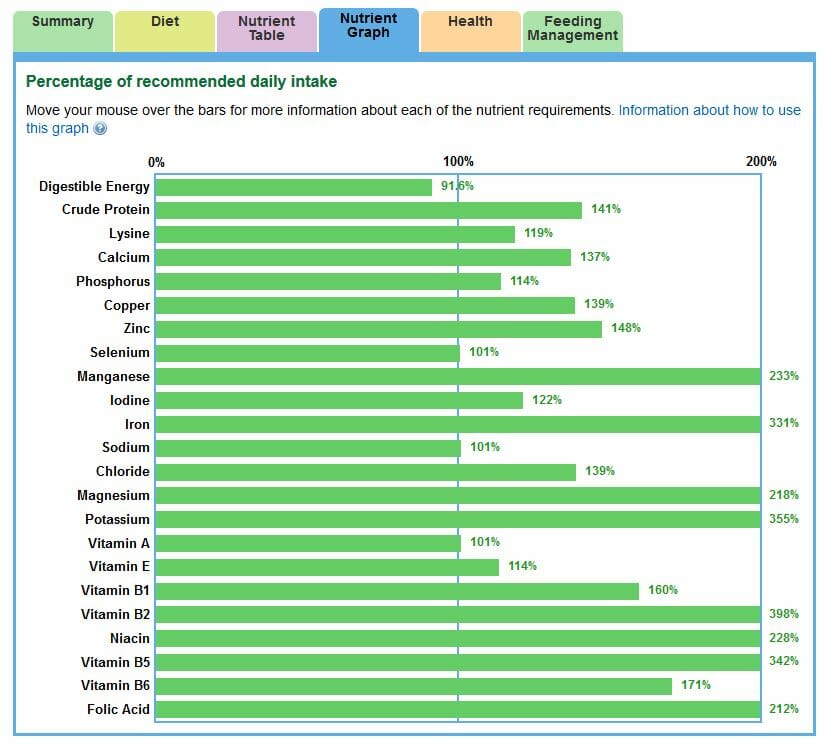
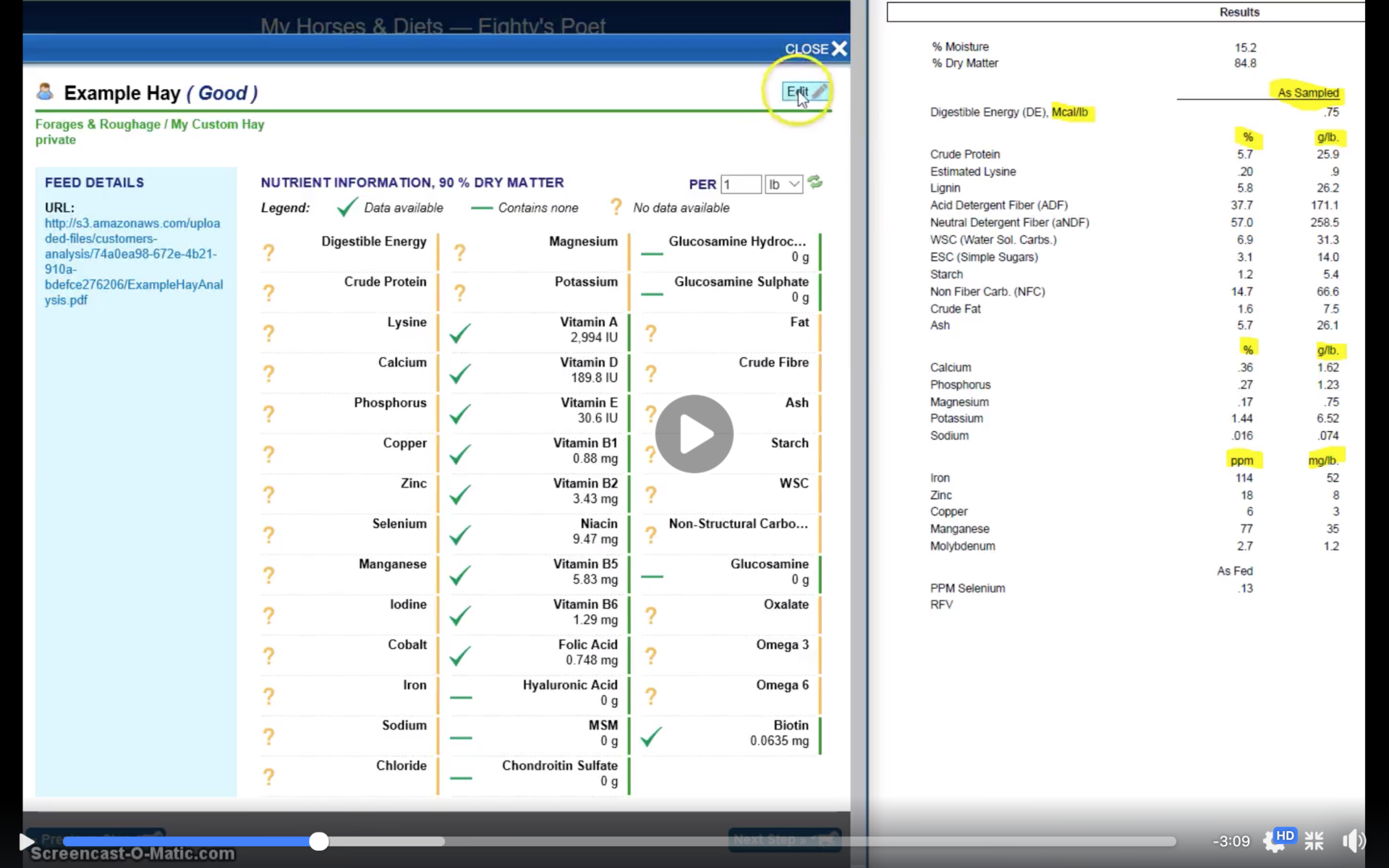
If you have accurately identified that Kikuyu, Bermuda Grass/Couch Grass, Buffel Grass or Setaria are present in your pasture, you will need to take this into account in your horse’s diets in FeedXL. First of all, determine what percentage of the pasture each of the species comprises, and then use the Advanced Pasture Builder feature to create a pasture that is comprised of these pasture types.
For example, if your pasture is 25% Kikuyu, 10% Setaria and 65% native grasses, use the Pasture Builder in FeedXL to create a pasture that is ‘C4-Type Grass – 25%, Setaria – 10%; and Native Grass – 65%. It is important to be accurate so FeedXL can calculate an accurate calcium to oxalate ratio for you and keep your horse out of harms way!
Once FeedXL knows these pastures are present in your diet it will warn you if the calcium to oxalate ratio of the diet is too low, putting your horses at risk of bighead, and guide you in adding additional calcium to achieve the minimum ratio required of 0.5 parts calcium to 1 part oxalate. For more information on this, please read our blog: Bighead Disease.
Diagrams and photos are from Penn State College of Agricultural Sciences https://plantscience.psu.edu/, the American Lawns website, Plants of Hawaii website, and the Informed Farmers website https://informedfarmers.com/.
Join FeedXL today and take control of your horse’s nutrition
Get EVEN MORE practical and personalised feeding guidance when you sign up to FEEDXL.
SIGNUP TO FEEDXL NOW
We would love to welcome you to our FeedXL Horse Nutrition Facebook Group. Ask questions and have them answered by PhD and Masters qualified equine nutritionists and spend time with like-minded horse owners. It’s free!
Click here to join the FeedXL Horse Nutrition Facebook Group