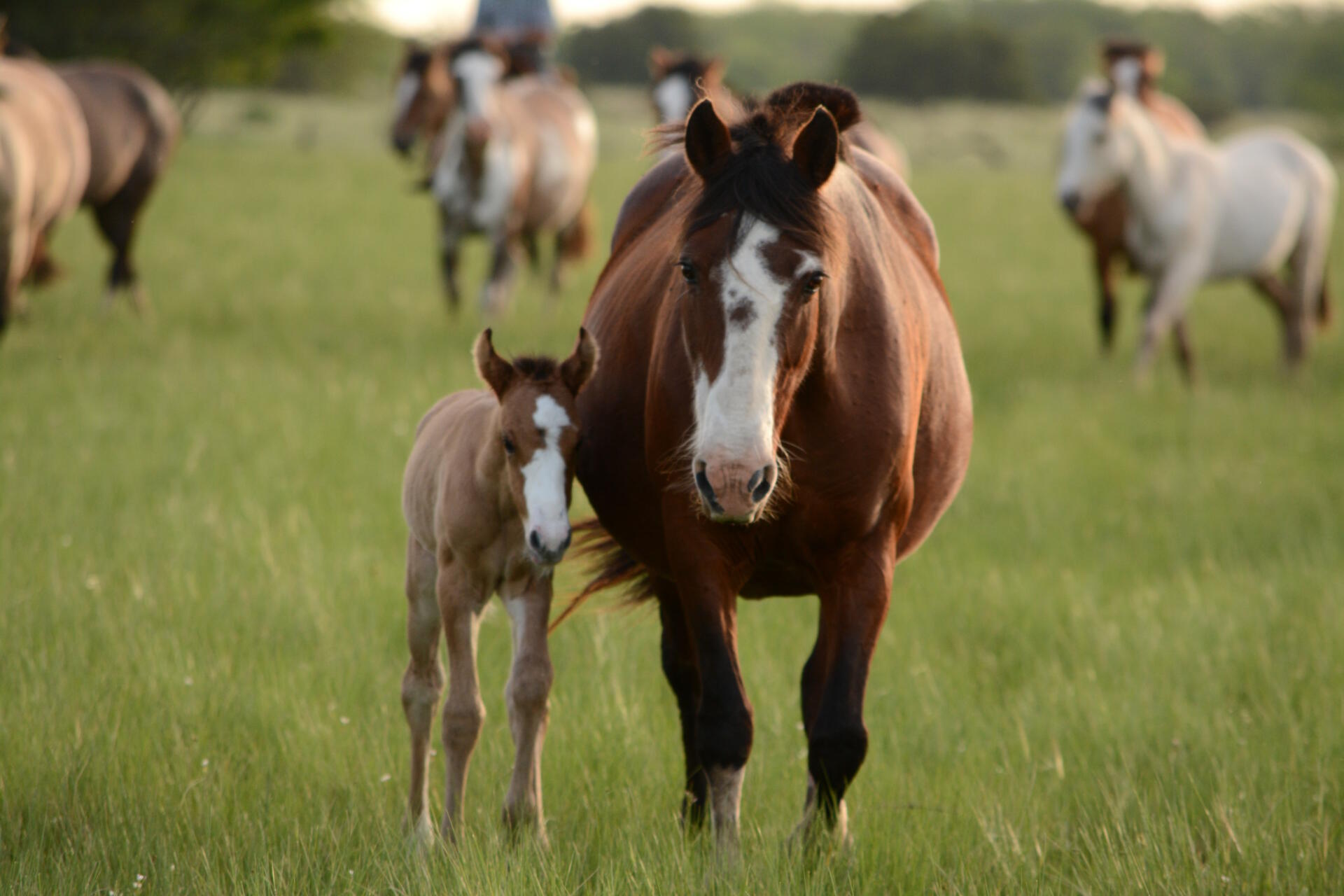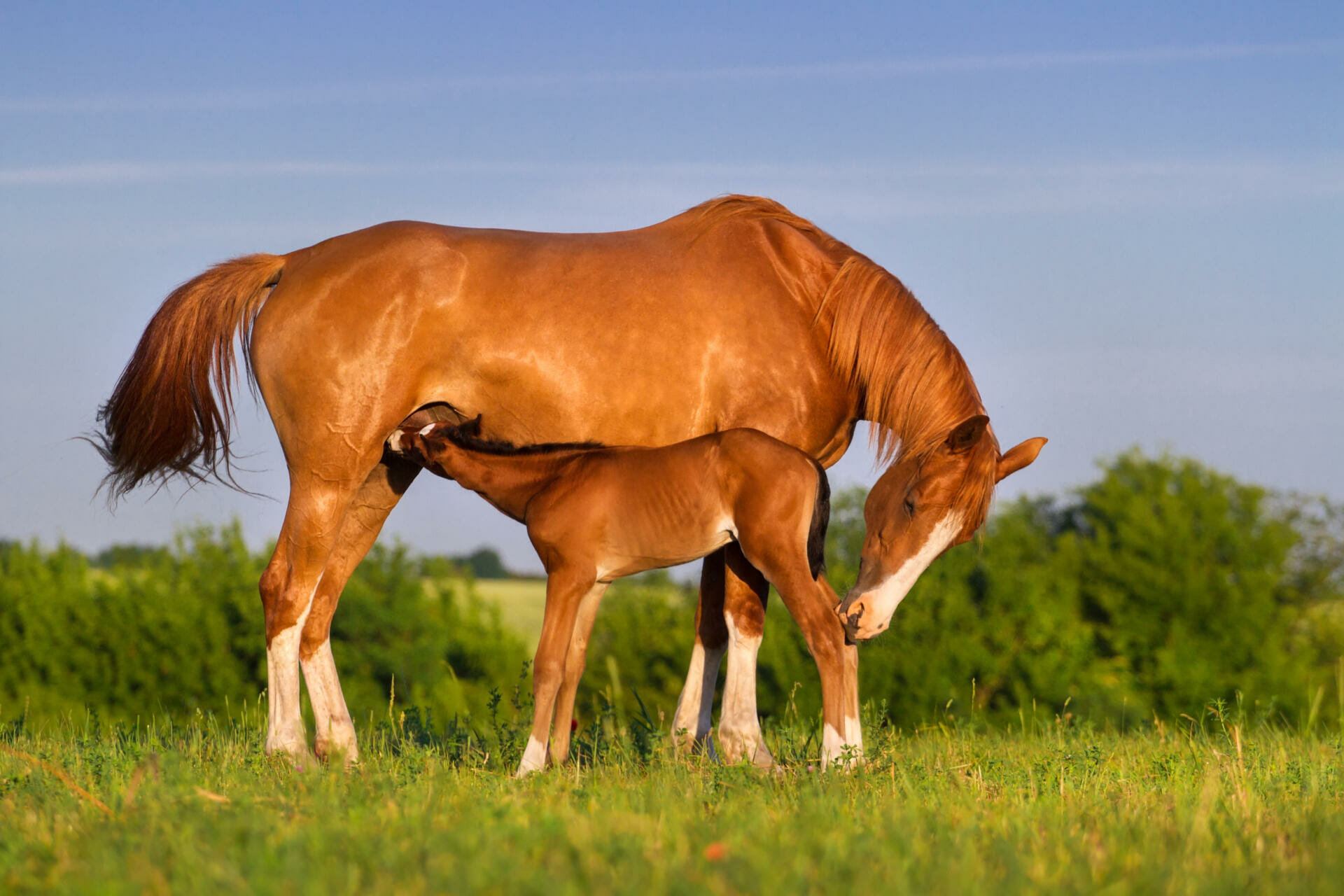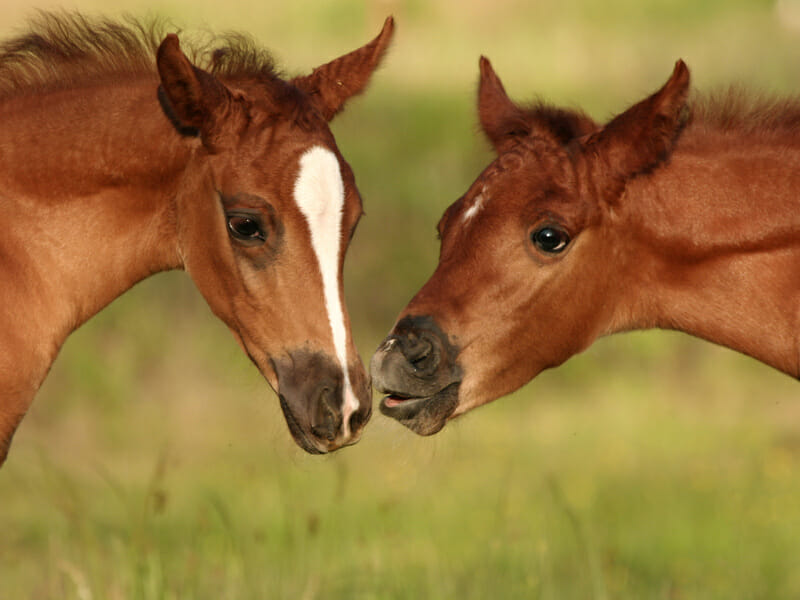
While seeing a healthy foal raised successfully by its dam is every breeder’s goal, unfortunately situations do arise where foals are unable to be suckled by their mothers and alternatives must be found. Whether the foal was orphaned due to complications during delivery, the mare is unable or unwilling to raise the foal or the foal needs to be weaned early to reduce the stress placed on its dam or to allow its dam to travel long distances to be bred, an alternative source of milk and maternal care must be found.
Orphaned foals can be raised by a nurse mare or they can be hand reared using a commercial milk replacer. The method chosen to rear the foal will depend on the availability of a nurse mare, the age and value of the foal, the expense associated with these options, as well as the time available and the skills of the foal’s carers.
If a nurse mare is or can be made available for your foal it will allow your foal to be raised in the most natural way possible. Once the mare has ‘adopted’ her new foal this method is also less time consuming for the foal’s carers.
While nurse mares will provide an excellent start for your orphan foal there are some important points to consider before using this option, including:
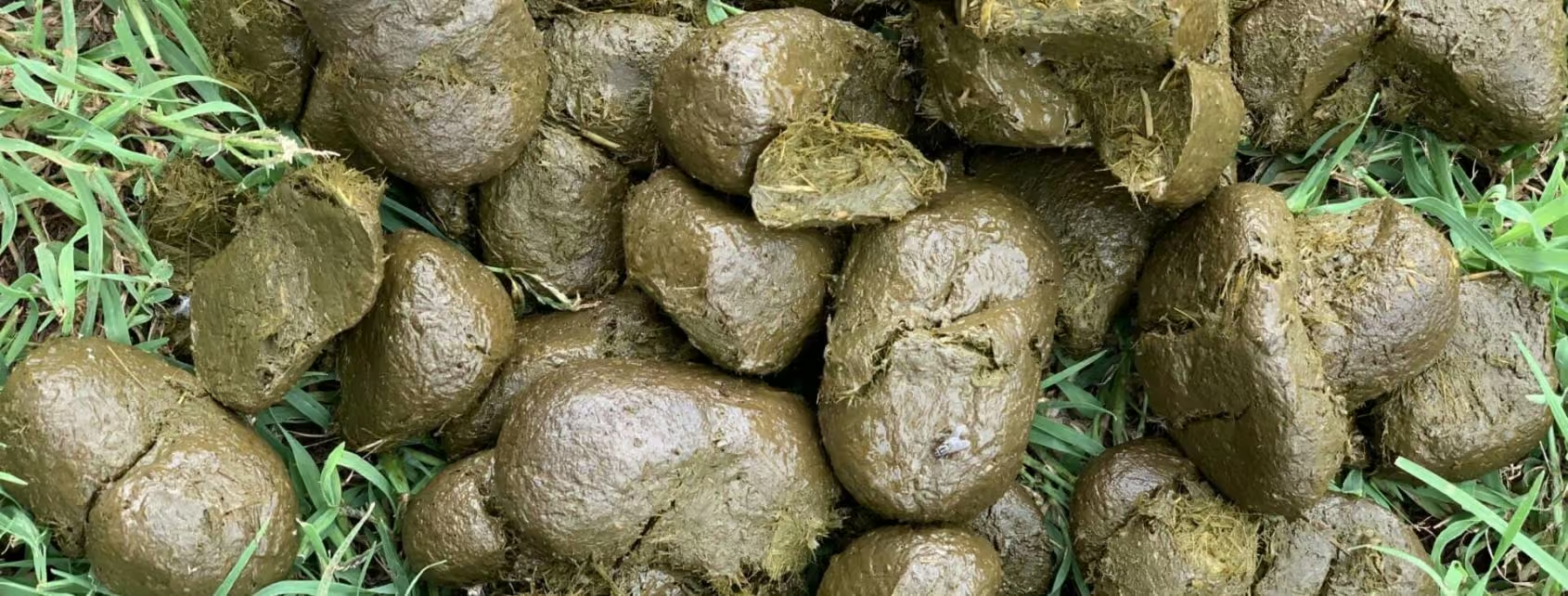
If a nurse mare that is in a suitable stage of lactation with a similar bodyweight to the foal’s dam can be located and the expense is justified, this is certainly the most desirable way for your orphan foal to be raised. Not only will excellent nutrition be provided, but the mare will also teach the foal how to graze and ‘be a horse’ and provide it with a source of manure the foal can eat in order to populate its gut with beneficial bacteria.
If a nurse mare is not an option the foal will need to be hand reared using a milk replacer. While hand rearing requires patience and time, when done properly with a good quality milk replacer that mimics the composition of mare’s milk it can achieve excellent results. Important points to consider when hand rearing foals include:
Hand rearing an orphan foal requires patience and a commitment to the health and nutrition of the foal, however it can be a very rewarding experience. Here are some pointers to help you successfully hand rear a foal.
When choosing a milk replacer you should look for one that will closely resemble mare’s milk. Mare’s milk is lower in protein and fat than cow’s milk, but higher in lactose. Mare’s milk replacers should contain around 18 % – 22% protein, 13% – 15% fat, 50% – 55% lactose and less than 0.5% fibre and should be fed as a 12.5 % solution (meaning you should mix 125 grams of milk powder per 875 mls of water). Using a milk replacer that is too high in protein or fat and too low in lactose can lead to problems like scouring and stunted growth. Vet prescribed low lactose milk formulas are NOT suitable for foals.
If your animals are anything like mine they won’t choose 10 am on a Tuesday morning to land you with an orphan foal, it will more likely be 11 pm on Christmas Eve. It might take you some time to source a suitable milk replacer, but in the interim you can use the following formula which we have with many foals with good success:
| 125 g | Skim Milk Powder |
| 125 g | Whole Milk Powder (you can use calf milk replacer, but be sure to make sure it is safe for foals) |
| 1.75 L | Warm Water |
Blending the skim milk powder with the whole milk powder reduces the fat content and increases the lactose content of the milk to make it more like mare’s milk.

Using a high quality Mare’s Milk Replacer will only be effective if it is fed correctly. Feeding too much, too little or large meals of milk replacer will cause problems like stunted growth, a pot-bellied appearance and scouring or diarrhoea. Following the guidelines below will give you the best results:
The following table provides a guideline for the amount of milk to feed your foal:
| Age | Mare’s Milk Replacer (amount per day) |
|---|---|
| Newborn | Colostrum** |
| 1 – 3 days | 1 L/10 kg BW |
| 3 – 7 days | 1.5 L/10 kg BW |
| 1 – 4 weeks | 2 L/10 kg BW |
| 1 – 4 months | 2 L/10 kg BW |
BW – bodyweight
* More information on colostrum below
If a foal is not achieving the weight gain you want, increase the amount of milk being fed to a maximum of 2.5 litres per 10 kg of bodyweight. If a foal is gaining too much weight, reduce the amount of milk being fed until his rate of growth is at a more appropriate level.
All foals must have constant access to clean fresh water and should always have lucerne hay or chaff as well as grass hay or pasture available. A creep feed can also be introduced around 2 weeks of age. Information on using a creep feed is below.
Mix 125 grams of Mare’s Milk Replacer per 875 mls of of fresh, warm water and mix thoroughly with a whisk until dissolved (follow manufacturer directions if they differ from this). Be sure to keep all mixing and feeding equipment clean. Wash buckets and teats in hot water after every use and clean with soapy hot water at least once a day.
It is best if milk is mixed fresh for each feeding. However if time is a constraint, the foal’s daily ration of milk can be mixed ahead of time and kept covered in a cool area or refrigerated until it is used. Any milk that is not used after 24 hours should be discarded.
Foals drink milk frequently in many small meals from their mother. Feeding milk to orphan foals in large meals causes the milk to rush through their stomach and small intestine undigested. This will result in the foal getting very little nutritive value from the milk and also means the sugary milk will be fermented in the foal’s sensitive hindgut. This will lead to scours and may also cause the ‘pot-bellied’ appearance so common in poddy fed animals.
To avoid these problems, orphan foals must be fed milk replacer in as many small meals as possible. The following table should be used as a guide to the number of times a foal should be fed each day. The foal’s daily milk intake should be divided equally into the number of meals it will receive per day.
| Age | Number of feeds |
|---|---|
| Newborn | Colostrum** |
| 1 – 3 days | 12 – 16 times/day |
| 3 – 7 days | 8 – 12 times/day |
| 1 – 2 weeks | 6 – 8 times/day |
| 3 – 4 weeks | 4 – 6 times/day |
| 1 – 2 months | 3 – 4 times/day |
| 3 – 4 months | 2 – 3 times/day |
These feeding frequencies should be used as a guide only. Feeding this frequently is time consuming and difficult if only one person is involved. If feeding this frequently is not possible, feed as often as you are able, with a minimum of four feeds per day being acceptable after the first week. The more frequently you can feed, the better results you will get.
Getting your foal to drink from a bucket will allow your foal to feed frequently without you needing to be there. See below for more information on bucket feeding.
Orphan foals are best introduced to the milk replacer through bottle feeding and then taught to drink from a bucket once they are used to not suckling from their dam and accustomed the taste of the milk replacer. Bucket training can start from 2-7 days of age. Where possible in the first one to two weeks, milk should be consistently fed at body temperature. After this time it is acceptable to feed milk at the foal’s environmental temperature.
A small bottle fitted with an infant’s or lamb’s teat is ideal for bottle feeding. When bottle feeding, it is important to keep the bottle at a height so that the foal’s nose is below the level of its eyes. In this position, the foal can swallow easily and the risk of milk being inhaled into the foal’s lungs as it sucks is reduced. The bottle should also be shaken occasionally during feeding.
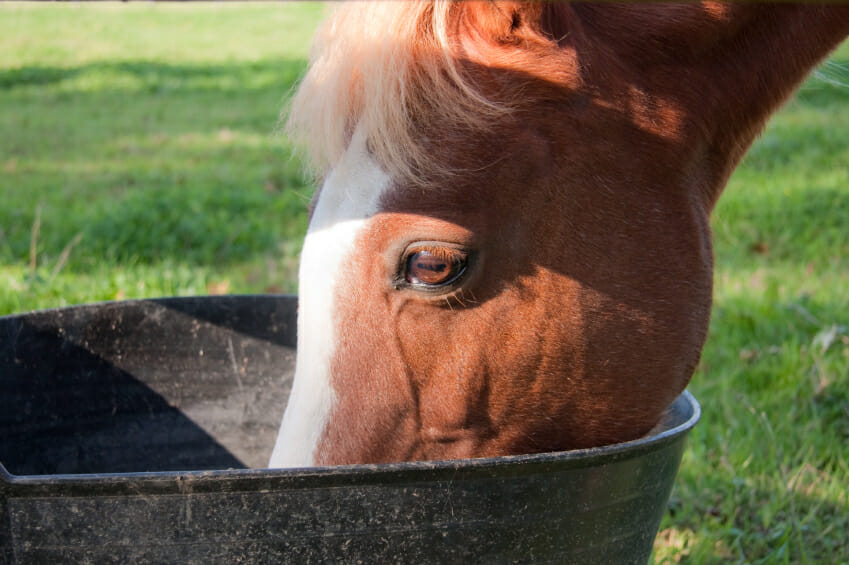
Once the foal is readily drinking the milk replacer, the foal can be taught to drink from a bucket. It’s best to begin when the foal is hungry. Offer the foal milk in a wide dish and stimulate drinking by allowing the foal to suck on a milk-wet finger. Gradually draw the foal towards the milk so the foal’s mouth is in the milk. Take care to keep its nostrils out of the milk. Once the foal starts to take in milk, remove the finger. Repeat this process until the foal learns to drink on its own. This may require some patience, but it is worth the effort.
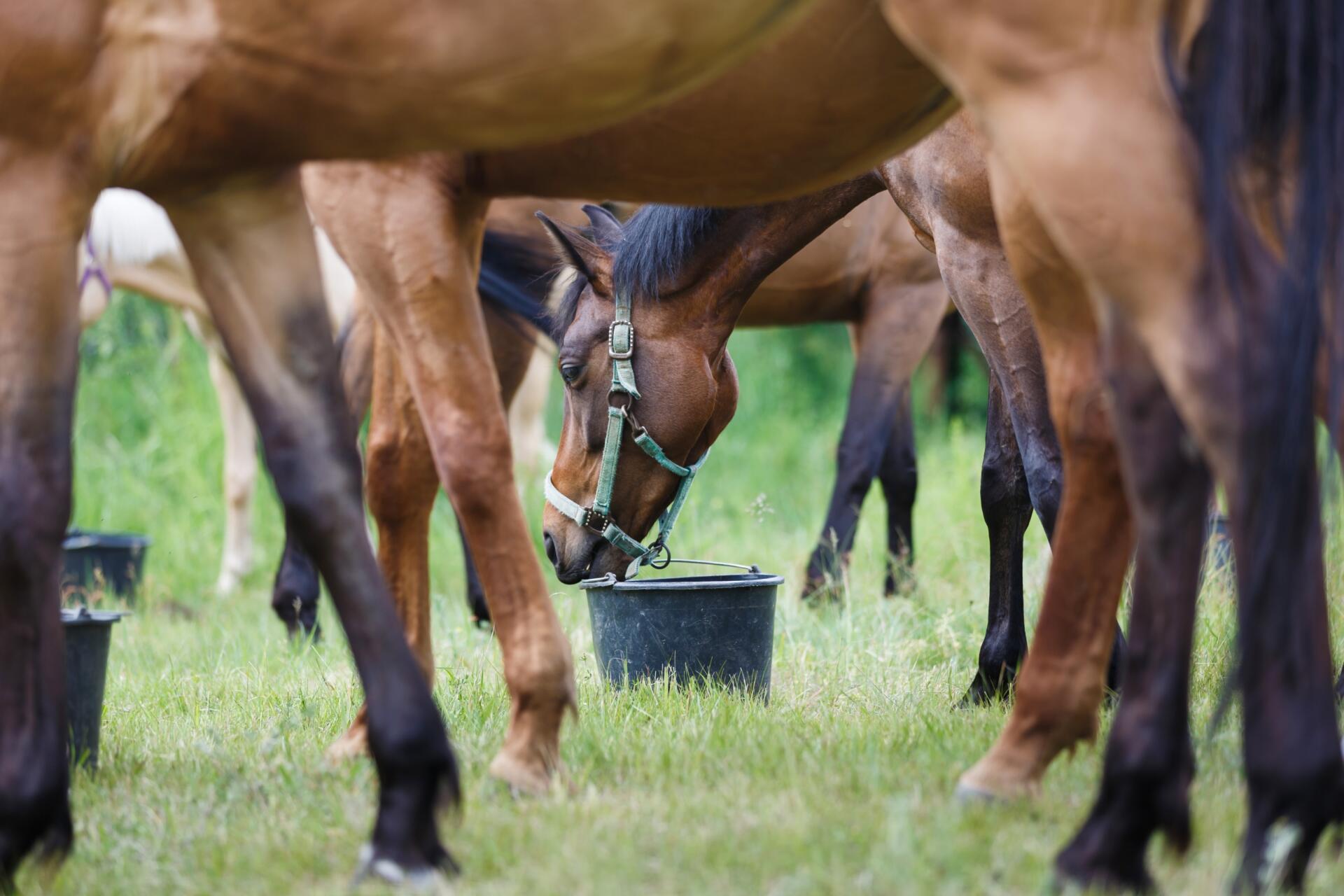
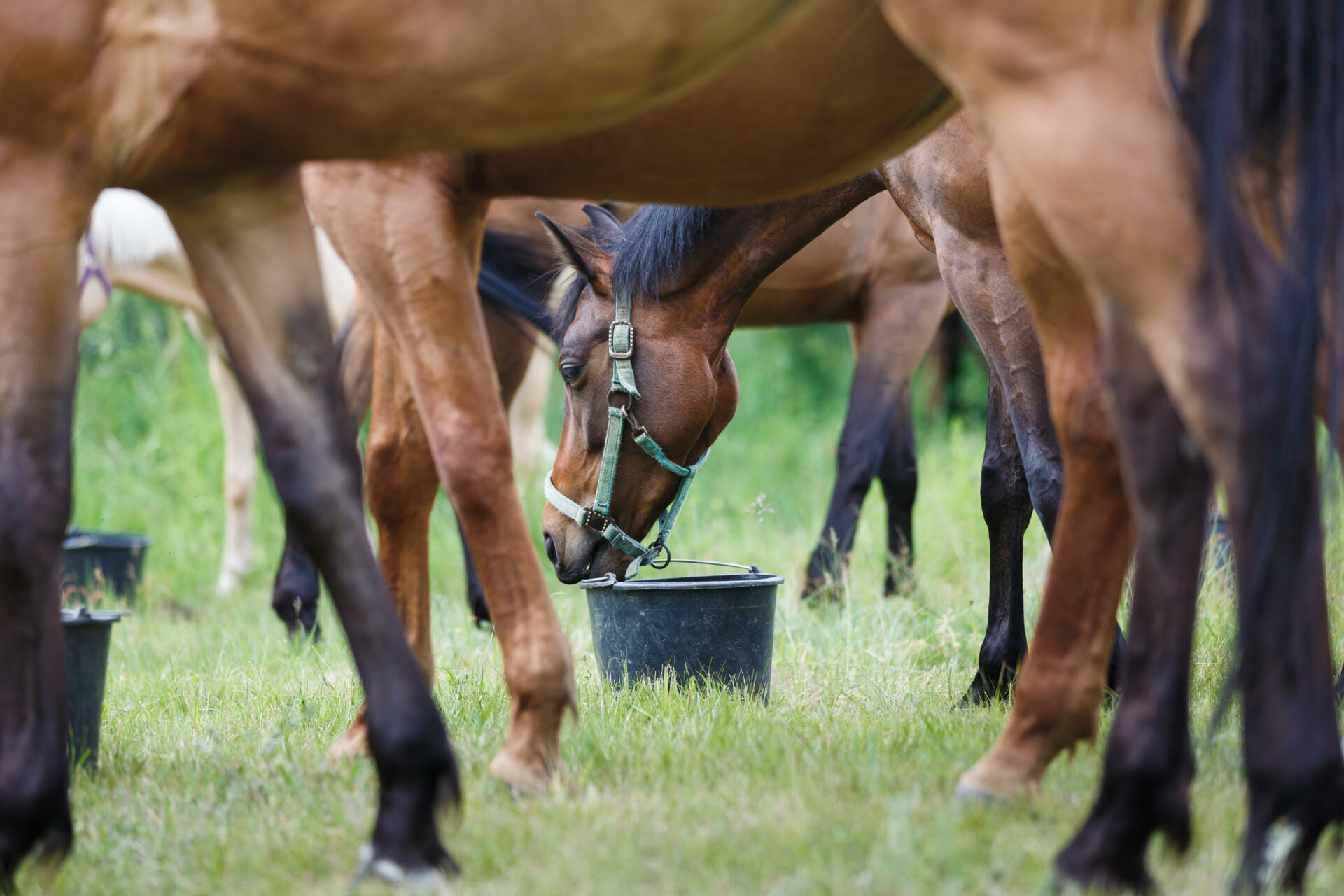
Once the foal is drinking from the dish, begin feeding from a light coloured plastic bucket, 30 cm in diameter and 20-25 cm deep. To stop the foal from standing in its bucket or tipping it over, secure the bucket to a wall or fence at a height that is below the foal’s chest. Alternatively, build a small hay bale barrier with bales on 4 sides of the bucket to allow the foal to easily reach the milk but stop it from tipping over the bucket.
Once the foal is used to drinking from a bucket and is regulating the amount of milk it drinks in one meal you can leave milk constantly available to the foal so it may drink its milk in many small meals. If you do leave milk constantly available be sure not to exceed the foals total daily allowed intake and replace the milk with fresh milk and thoroughly clean the bucket at least twice per day in winter and four times per day in summer.
If you find that your foal is drinking all of the milk you are leaving out in one or two large meals you will have to continue providing milk in as many meals as you can manage in one day, using Table 4 as a guide. Allowing a foal to drink large meals can result in stunted growth and scouring.
A high quality creep feed specially formulated for foals can be introduced to supplement milk intake starting at two weeks of age. Providing foals with a creep feed has been shown to improve the growth and development of young foals.
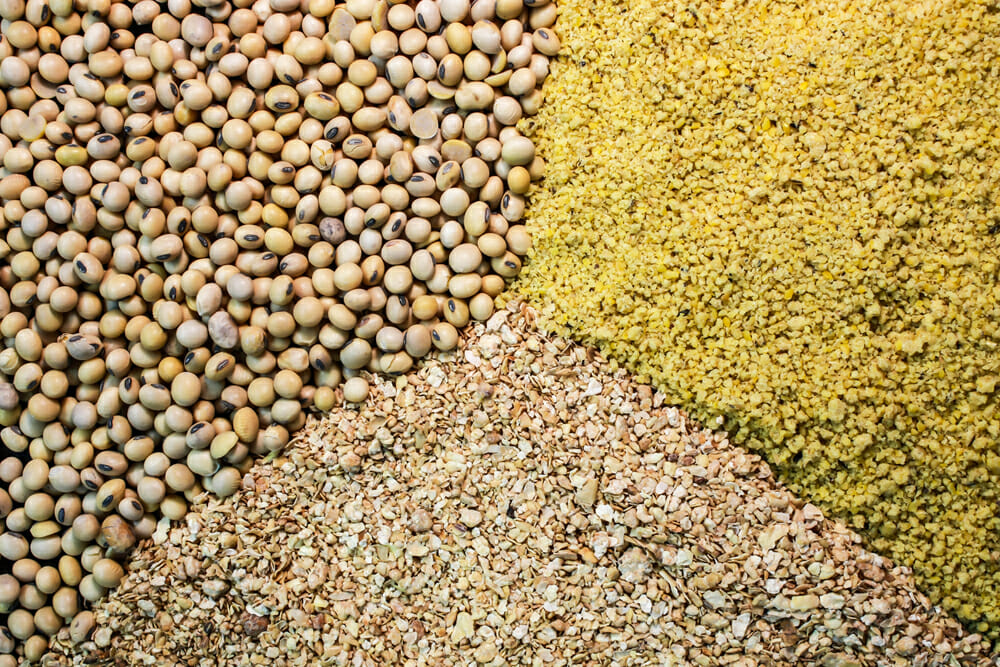
A foal creep feed should contain 16 to 20% high quality protein with good levels of the essential amino acids lysine and methionine from milk and plant sources like soybean. It should also be fortified with minerals to support sound bone development and vitamins to support muscle growth and a strong immune system.
Unrestricted access to clean, fresh drinking water should be provided near the feeding area and Lucerne/alfalfa hay or chaff as well as grass hay or pasture must be made freely available.
An orphan foal can be weaned once it is confidently grazing pasture and growing well at around 4 months of age. If the foal is doing very well and time to care for the foal is limited it may be weaned at 3 months. If the foal is doing poorly and time is available to care for the foal you should continue to supplement it with milk until 5 months of age.
To wean the foal, gradually reduce the amount of milk it is receiving by 0.5 to 1 litre per day, depending on how quickly you want to wean the foal. At the same time, gradually increase the amount of creep/concentrate feed and Lucerne/alfalfa chaff to 120 g/10 kg of bodyweight. If the foal is to be weaned into a group of weanlings that are eating a different diet, introduce the new feed slowly as you decrease the amount of milk and creep feed.
Ideally, an orphan foal should be weaned into a group of other weanlings to encourage normal psychological development. However, if the foal is behind other weanlings in stage of development it may be best to keep it separate and continue supplementing it individually until 6 months of age. Once the foal is allowed to run with other weanlings or horses, continue to carefully monitor the foal for any nutritional, health or growth setbacks.
Keeping a close eye on your orphan foal and getting to know its personality and normal levels of activity will allow you to quickly notice when the foal isn’t as alert, active or hungry. Changes in a foal’s behaviour may signal a problem and you should be on the lookout for signs of scouring, colic, poor appetite and fever. If you are concerned about your foal’s state of health you should always contact your veterinarian.
Some important aspects of raising a healthy orphan foal are outlined below:
Colostrum is the first milk available to the foal from its dam and contains high concentrations of antibodies (immunoglobulins), protein, energy, minerals and other essential nutrients necessary for foal survival, well-being and resistance to diseases in early life.
The newborn foal has little active immunity against disease and must absorb antibodies from the colostrum through the wall of the intestine to gain protection. Antibodies are complex proteins designed to combat infection. If a foal does not receive enough antibodies from colostrum in the very early stages after birth its risk of infection will be high and chance of survival low. A foal’s ability to absorb antibodies from colostrum is highest immediately after birth and declines in the following 24 hours.
Regardless of which rearing method is chosen, it is important for foals orphaned at birth to receive an adequate intake of colostrum prior to being placed on a foster mare or given a milk replacer.
It is important to provide the foal with at least 750-1000 ml/10kg of bodyweight of colostrum within 12 hours of birth. The total volume of colostrum a foal needs can be divided into equal quantities and fed to the foal by bottle every hour for the first 12 hours of life. If you can’t obtain colostrum from the foal’s dam, high quality frozen colostrum is available. Contact your veterinarian if you require colostrum. Frozen colostrum should never be heated to thaw and certainly should never be microwaved it as this will destroy the antibodies.
Ideally a foal’s level of immunity and resistance to infectious disease should be assessed at 6 to 10 hours of age by testing for serum IgG antibody levels. If IgG levels are low, the foal should be given additional colostrum with high IgG levels if this is available. If high quality colostrum is not available, the foal will need intravenous administration of IgG antibodies. Failure to achieve adequate IgG levels will leave the foal exposed to disease and infection, making it difficult for the foal to thrive, and ultimately reduce its chance of survival.
The navel of a newborn foal is the simplest and most likely site for direct infection to enter the foal. To prevent navel infections, the umbilical cord stump should be soaked for several seconds in a 1% povidone-iodine solution twice daily for 3 days. The foal’s environment should also be kept clean to reduce the chance of naval infection (more on hygiene below).
The naval should be regularly checked for signs of infection including, heat, reddening, moistness, swelling or discharge. If the naval does become inflamed you should seek immediate veterinary advice.
Meconium (first faeces) should be passed by the foal within one-half to 6 hours after birth. If you notice a foal repeatedly getting up and down, straining with its tail up and an arched back, switching its tail and making repeated attempts to urinate or defecate without passing meconium, seek veterinary advice.
Scours may be caused by environmental stresses, internal parasites, viruses, bacterial infections, overfeeding, feeding changes, gastric ulcers or feeding poor quality or inappropriate milk replacers and feeds. Foals suffering from diarrhoea can become dehydrated and depressed within hours and therefore appropriate and rapid treatment is vital and it may be necessary to seek veterinary advice. The following management practices can help in preventing scouring in foals:
If scouring is due to overfeeding milk replacer or feeding an inappropriate milk replacer, first get the foal onto an appropriate replacer. These foals should then be fed a diluted milk mix (30% weaker) in more frequent and smaller meals until scouring stops. They can then be gradually reintroduced to a full strength mix and decreased feeding frequencies.
If you suspect the scouring is due to an infectious organism or internal parasites you should contact your veterinarian immediately to devise a suitable treatment plan. If you are unsure what is causing the scouring, contact your veterinarian for a diagnosis.
Internal parasite control is an important component of foal husbandry. Failure to control intestinal parasites will result in damage to the gastrointestinal tract, resulting in slow growth rates, a rough coat, general unthriftiness and stunted development. A cough may also be evident.
Foals can be drenched with a foal safe deworming medication at 6 to 8 weeks of age. Seek veterinary advice if you feel a foal needs drenching earlier than 6 weeks. Care should also be taken to deworm nanny mares or the foal’s buddy at the same time. Paddocks should be rotated to reduce pasture worm contamination levels, with foals, nannys and/or buddies placed onto a fresh pasture paddock following drenching. Drenches should be rotated to avoid worm resistance. Ideally you should use faecal egg count tests on your orphan foal to ensure your worming program is effective.
Foals should be vaccinated for tetanus. If the colostrum the foal received was from a mare that was not vaccinated for tetanus in the last trimester of pregnancy or from a mare whose vaccination history was unknown, the foal should also be given the tetanus antitoxin at 1 to 2 days of age. Foals may also need to be vaccinated for strangles and other infectious or insect borne diseases. Discuss your foal’s vaccination requirements with your veterinarian to develop an appropriate schedule.
Keeping a foal’s feeding equipment, as well as its environment clean will reduce the likelihood of infection and diseases occurring. Good hygiene practices include:
Developmental orthopaedic disease (DOD) is a term used to describe a group of diseases that affect the structural soundness of a growing horse. DOD includes osteochondritis dissecans (OCD), angular limb deformities, physitis, contracted tendons and wobbler syndrome. DOD can be caused by a number of factors including nutrition, genetics, exercise, environmental and management factors and trauma or injury.
The most critical time in a young horse’s growth and development is from birth to 9 months of age, during which any deficiencies in minerals or an oversupply of energy or restriction in exercise may predispose the foal to DOD.
The following preventative measures can be implemented to help minimise the incidence of DOD from developing:
An orphan foal requires special care and it is important to keep the foal warm and dry as it will be deprived of the warmth of its dam. Provide a clean, dry, well ventilated but draught-free environment that is sheltered from the wind and rain. Foals should be stabled at night when the weather is wet and cold and covered with a lightweight rug for additional warmth. If the weather is warm and dry there is no need to stable the foal, but a companion should be available to the foal if it is left in a paddock or yard overnight.
Provide clean and soft bedding that is low in dust. Clean shavings are most desirable as they are lowest in respiratory irritants and toxins.
Allow foals daily access to outside paddocks for exercise and sunlight. An ideal paddock size is half a hectare per foal. Paddocks should be well drained, sheltered and rotated if possible or kept clean with droppings collected daily. Fences must be safe, secure and highly visible.
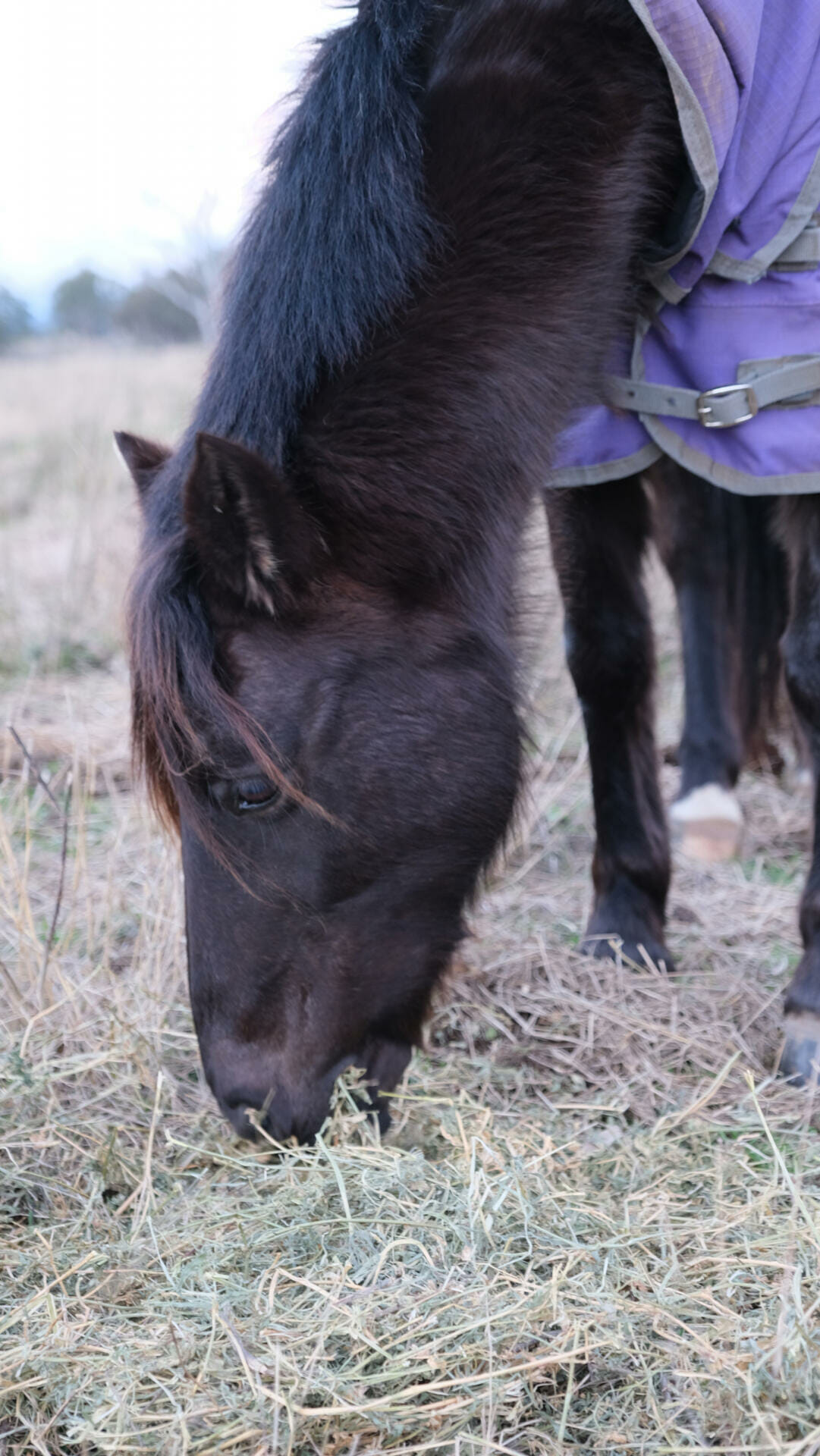
Providing the orphan foal with a companion animal is a good idea for socialisation and to prevent the foal from fretting. A gentle and calm pony or horse is the best companion as they will help the foal learn how to graze, eat various feeds and will also teach them the ground rules of being a horse. Using another horse or pony also ensures manure is available for the foal to eat in order to establish healthy populations of beneficial bacteria in the hindgut. If a suitable horse or pony is not available, a poddy lamb or calf or a mule, donkey or goat may be used as a companion for the foal.
Raising an orphan foal is a labour intensive and at times difficult task. But, when done well you can achieve near normal growth rates and a well mannered and developed foal. We hope that the information provided here helps you to achieve success should you have the misfortune of being landed with a foal that cannot be raised by its natural dam.
Time to become a Member of FeedXL?
Get EVEN MORE practical and personalised feeding guidance when you sign up to FEEDXL.
SIGNUP TO FEEDXL NOW
We would love to welcome you to our FeedXL Horse Nutrition Facebook Group. Ask questions and have them answered by PhD and Masters qualified equine nutritionists and spend time with like-minded horse owners. It’s free!
Click here to join the FeedXL Horse Nutrition Facebook Group